
What Does Coinbase’s India Relaunch Mean For Crypto Users?
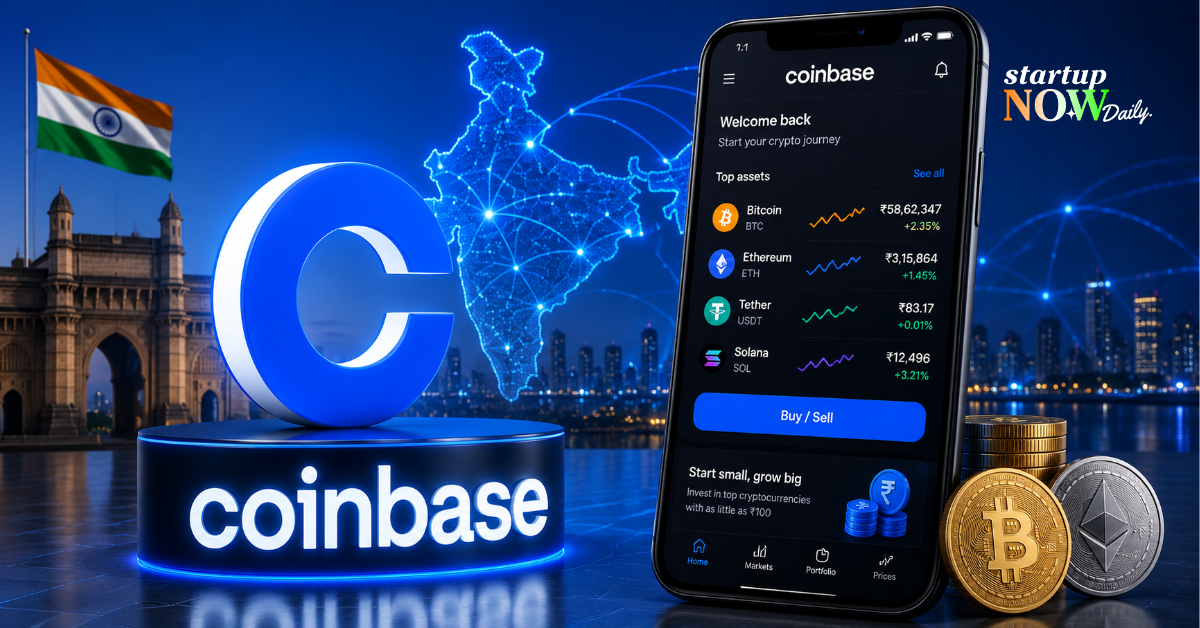
Global cryptocurrency exchange Coinbase is making a significant return to India, relaunching retail operations more than two years after suspending key services in the country.
The move signals renewed confidence in India’s crypto market despite the absence of a comprehensive cryptocurrency regulatory framework. Coinbase has also doubled down on its India strategy through investments in domestic crypto platforms CoinDCX and CoinSwitch, underlining its long-term commitment to the market.
The relaunch allows Indian users to directly deposit and withdraw funds through bank accounts using the Immediate Payment Service (IMPS), eliminating the need for peer-to-peer (P2P) payment mechanisms and third-party intermediaries that have often complicated crypto transactions.
Why Is Coinbase Returning To India Now?
The company’s renewed push comes after registering with the Financial Intelligence Unit (FIU), the Finance Ministry’s anti-money laundering agency, more than a year ago.
According to John O’Loghlen, Head of Asia Pacific at Coinbase, India continues to witness strong cryptocurrency adoption despite regulatory uncertainty.
He noted that while regulations have evolved slowly, consumer interest in digital assets has remained resilient. Coinbase believes the regulatory environment will gradually mature, similar to what the company has experienced across several international markets.
The company’s return also coincides with increasing global interest in digital assets, rising institutional participation, and improving infrastructure around crypto trading and custody services.
How Will Indian Customers Benefit?
One of the biggest changes in Coinbase’s India offering is the ability to directly move money between bank accounts and the exchange through IMPS.
Previously, many crypto platforms relied on P2P settlement systems or alternative payment routes due to banking restrictions and regulatory challenges.
The direct banking integration is expected to provide:
- Faster deposits and withdrawals
- Improved user experience
- Greater transaction transparency
- Reduced reliance on intermediaries
- Enhanced compliance with regulatory requirements
The development could make crypto investing more accessible to retail investors seeking a seamless trading experience.
Why Is India Important For Coinbase?
India remains one of the world’s largest and fastest-growing digital economies, with a rapidly expanding base of technology savvy consumers.
Despite taxation challenges and regulatory ambiguity, crypto adoption in the country has remained strong, particularly among younger investors.
Coinbase has already strengthened its exposure to the Indian market through investments in crypto exchanges CoinDCX and CoinSwitch, two of the country’s leading digital asset platforms.
The company appears to view India as a strategic long-term growth market, especially as digital finance and blockchain adoption continue to expand.
What Challenges Still Remain?
While Coinbase’s return represents a positive development for India’s crypto ecosystem, regulatory clarity remains a major challenge.
India currently imposes a 30% tax on gains from virtual digital assets and a 1% Tax Deducted at Source (TDS) on crypto transactions. However, a comprehensive regulatory framework governing cryptocurrencies has yet to be introduced.
Industry participants continue to await clearer guidelines regarding licensing, investor protection, taxation, and operational requirements for exchanges.
Can Coinbase Strengthen Its Position In India’s Crypto Market?
Coinbase’s re-entry suggests growing confidence in India’s long-term crypto potential.
With direct banking support, investments in local crypto startups, and increasing engagement with regulators, the company is positioning itself to compete more aggressively in one of the world’s most important digital asset markets.
As regulation gradually evolves and adoption continues to rise, India could become a key growth engine for Coinbase’s international expansion strategy.