
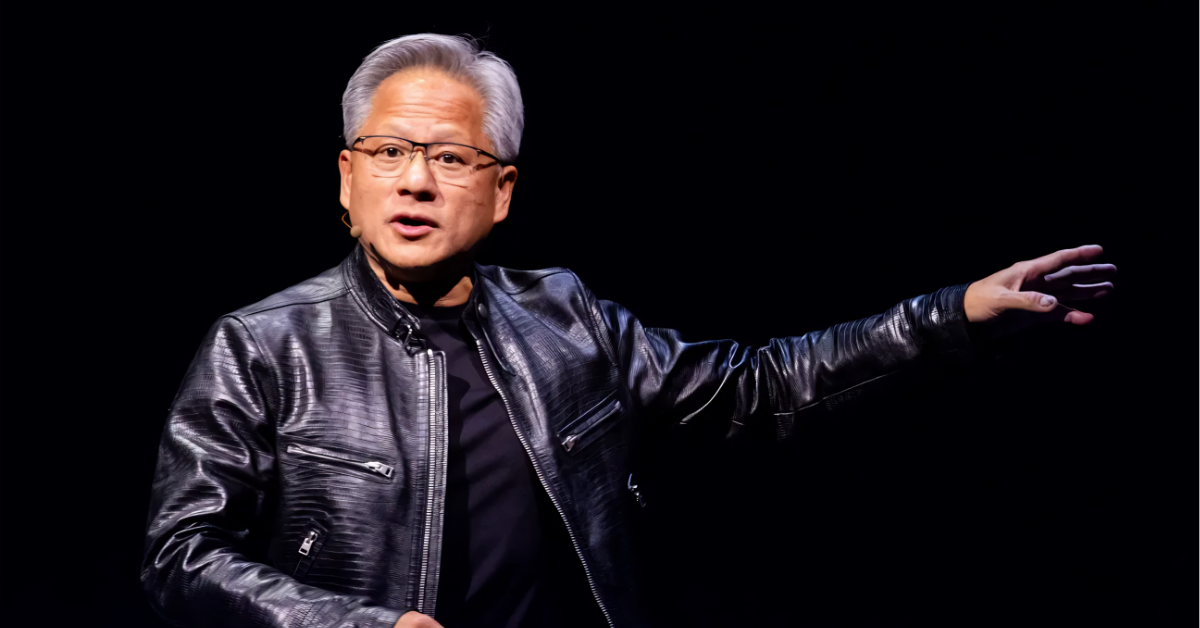
Why Is Jensen Huang Talking About Employee Pay?
Jensen Huang has weighed in on the growing debate around employee compensation in the artificial intelligence industry, saying workers should be paid “as much as possible” as companies benefit from the global AI boom.
Speaking to reporters on the sidelines of the Computex trade show in Taipei, the Nvidia chief executive was asked about recent bonus payouts at Samsung Electronics, where some chip engineers are reportedly set to receive bonuses worth up to $400,000.
Responding to the question, Huang said he believes employees should be rewarded generously for their contributions.
“I think people should be paid as much as possible,” Huang said, adding that he personally tries to compensate Nvidia employees as much as he can.
Why Is Employee Compensation Becoming A Major Issue?
As demand for artificial intelligence infrastructure continues to surge, leading semiconductor and technology companies are reporting strong profits and rising valuations.
This has intensified discussions around how the benefits of the AI revolution should be shared among employees, particularly engineers and technical talent driving innovation.
Companies across Asia, including Samsung and Taiwan Semiconductor Manufacturing Company (TSMC), have faced increasing scrutiny over compensation and profit-sharing policies.
Samsung recently reached an agreement with labor unions that helped avert a potential strike, while TSMC has also sought to reassure employees about incentive payouts tied to company performance.
What Did Huang Say About AI Replacing Jobs?
Huang also addressed concerns that artificial intelligence could eventually replace large numbers of workers.
The Nvidia CEO dismissed those fears, describing the idea as “nonsense” and arguing that AI is more likely to drive economic growth than destroy jobs.
According to Huang, AI has the potential to boost productivity, create new business opportunities, increase corporate profits, and contribute to overall GDP growth.
His comments align with Nvidia’s broader view that AI will act as a productivity-enhancing technology rather than a direct replacement for human workers.
Why Is Nvidia At The Center Of The AI Revolution?
Nvidia has emerged as one of the biggest beneficiaries of the global AI boom, with its graphics processing units (GPUs) powering many of the world’s leading artificial intelligence models and data centers.
The company’s rapid growth has transformed it into one of the world’s most valuable technology companies, making Huang one of the most influential voices in the AI industry.
At Computex, Huang unveiled several new products, including the Nvidia Spark chip designed for personal computers, while discussing the company’s broader vision for AI, robotics, and next-generation computing.
What Did Huang Say About Taiwan?
During the event, Huang once again praised Taiwan’s semiconductor ecosystem, which plays a crucial role in Nvidia’s supply chain.
When asked about Nvidia’s investments in Taiwan, he emphasized that the company’s spending across the island’s semiconductor and electronics industries represents its most significant contribution.
Huang has consistently highlighted Taiwan’s importance to the global technology sector, particularly through its partnerships with manufacturers such as TSMC.
What Does This Mean For The Tech Industry?
Huang’s comments come at a time when technology companies worldwide are balancing rapid AI-driven growth with increasing expectations from employees, investors, and regulators.
As competition for engineering talent intensifies, compensation and profit-sharing are becoming critical factors in attracting and retaining skilled workers.
With AI continuing to reshape industries and generate substantial profits for leading firms, the debate over how those gains should be distributed is likely to remain a key topic across the global technology sector.