
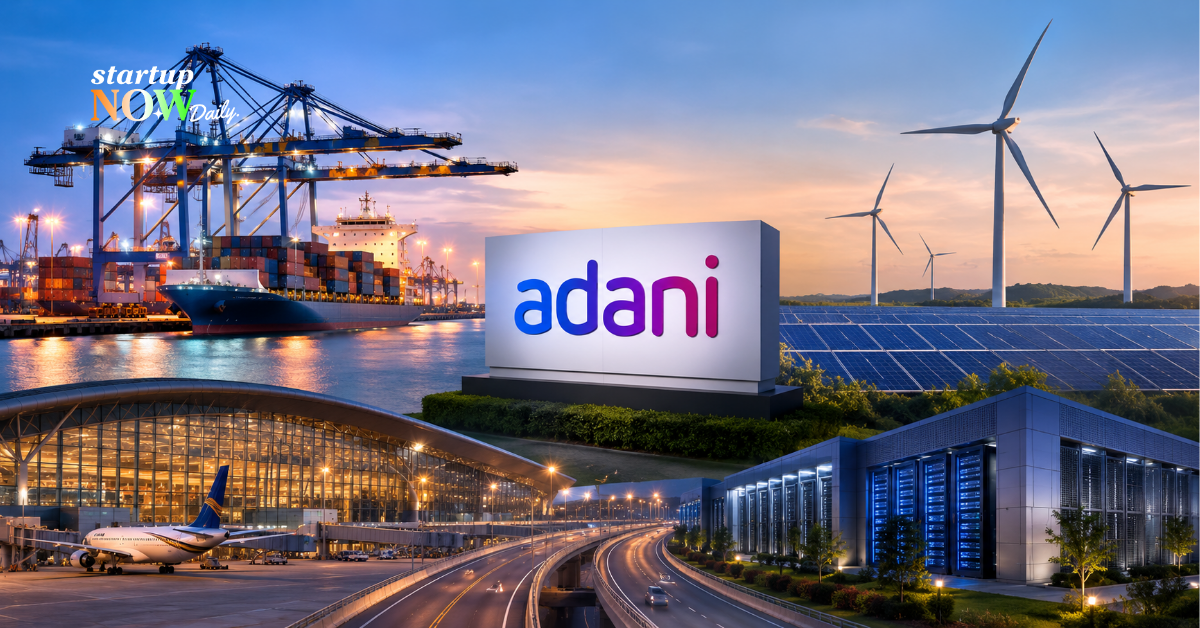
Adani Group Enters New Growth Phase With Record Infrastructure Investments
The Adani Group reported its highest ever annual capital expenditure and EBITDA during FY26, highlighting an aggressive expansion strategy across infrastructure, energy, logistics, utilities, and transport businesses.
According to the group’s annual results and credit compendium, Adani companies collectively invested ₹1.53 trillion ($16.1 billion) during the fiscal year, making it the largest annual capital expenditure program ever undertaken by an Indian corporate group.
The investment surge helped expand the group’s gross asset base to ₹7.85 trillion ($82.8 billion), while consolidated EBITDA reached a record ₹94,834 crore ($10 billion), registering a 5.6% year-on-year increase.
Where Did Adani Invest The Most?
Nearly 80% of the group’s FY26 capital expenditure was directed towards core infrastructure sectors including energy, utilities, transport, and logistics.
The investment cycle coincided with the commissioning of several major projects, including 5.1 GW of renewable energy capacity, battery energy storage systems (BESS), Navi Mumbai International Airport, the Guwahati airport terminal, the Ganga Expressway, and a copper smelter project.
The group expects these assets to contribute significantly to earnings and cash flows beginning FY27.
Infrastructure Businesses Drive Earnings Growth
Core infrastructure businesses remained the primary earnings engine for the conglomerate, generating ₹82,083 crore in EBITDA and accounting for 87% of total portfolio earnings.
The transport segment, led by Adani Ports and Special Economic Zone, delivered the strongest growth, with EBITDA increasing 23.2% to ₹25,228 crore.
Utility businesses also recorded steady growth, reporting EBITDA of ₹45,377 crore, up 4.6% from the previous fiscal year.
Debt Remains Under Control Despite Massive Spending
Despite undertaking record investments, the group maintained its leverage below its stated threshold.
Adani reported a net debt-to-EBITDA ratio of 3.3x, comfortably below its internal ceiling of 3.5x.
Cash and cash equivalents stood at ₹55,852 crore at the end of March 2026, equivalent to roughly 15% of gross debt. The group stated that available liquidity remains sufficient to meet debt servicing requirements for at least the next 17 months.
Meanwhile, the average borrowing cost declined to 7.8% in FY26 from 9% two years earlier, supported by improved credit ratings across portfolio companies.
Key Businesses Deliver Strong Operational Performance
Adani Green Energy expanded its operational renewable energy capacity by 5.1 GW, taking total capacity to 19.3 GW. The company also increased its battery energy storage system capacity to 3.37 GWh at Khavda, Gujarat.
Adani Energy Solutions reported an under-construction transmission pipeline worth ₹71,779 crore and crossed 10 million smart meter installations, with an order book of 25 million meters.
Adani Power is targeting generation capacity of 42 GW by FY32, with 23.7 GW already secured against its current installed capacity of 18.2 GW.
Adani Ports handled a record 500.8 million metric tonnes of cargo during FY26, representing 11% growth over the previous year. The company also completed the acquisition of NQXT Australia, adding an additional 50 million tonnes of handling capacity.
The group’s airports business processed 95.3 million passengers across eight airports during the year.
Cement And Emerging Businesses Continue To Expand
Ambuja Cements strengthened its market position following the acquisition of Orient Cement.
Cement sales volumes rose 16.1% year-on-year to 73.7 million tonnes, reinforcing the group’s growing presence in India’s infrastructure and construction sectors.
Meanwhile, Adani Enterprises raised ₹24,930 crore through a rights issue, providing additional capital to fund future growth initiatives.
What Does This Mean For Adani’s Future?
The FY26 performance signals what Adani describes as the beginning of its next major investment cycle.
Management believes India’s long-term infrastructure, logistics, and energy transition opportunities remain significant and sees the current phase of capital deployment as laying the foundation for future earnings growth.
With major projects now becoming operational and several large assets nearing completion, the group expects FY27 and beyond to witness stronger cash flow generation and increased profitability from its expanded infrastructure portfolio.