
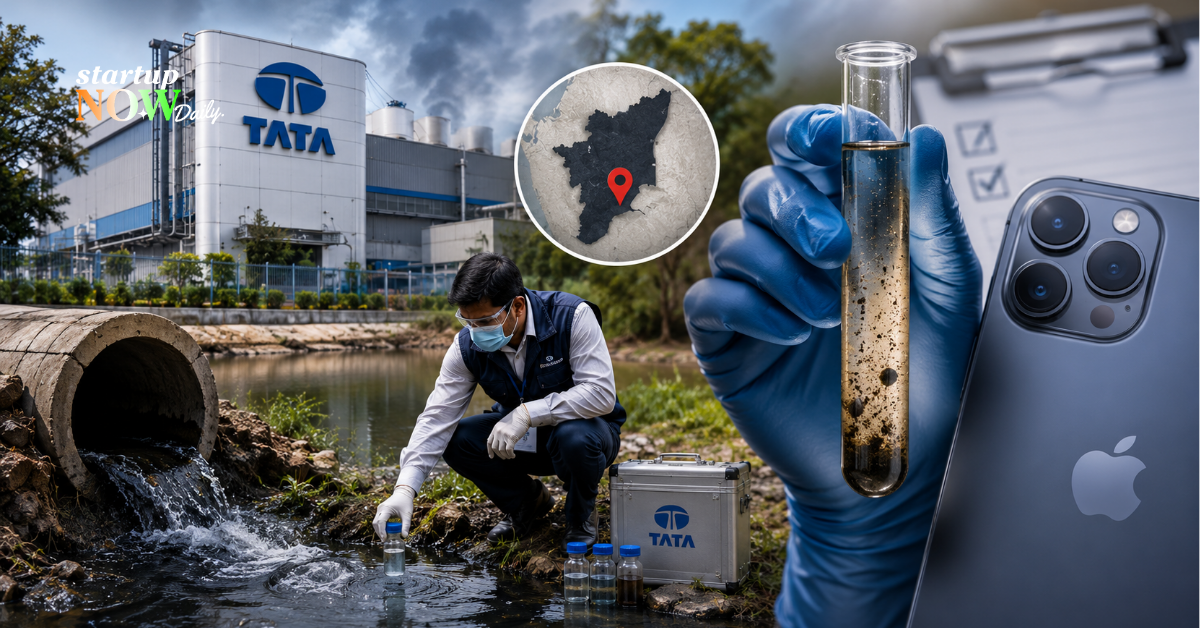
Health Investigation Adds New Challenge For Tata’s Apple Manufacturing Operations
A Tata Electronics facility that supplies components for Apple iPhones is facing a health investigation in Tamil Nadu after local farmers alleged that wastewater discharge from the plant contaminated groundwater and agricultural land, according to government documents and officials cited by Reuters.
The development adds a new dimension to an ongoing environmental dispute involving Tata’s manufacturing facility in Hosur, one of the key production sites supporting Apple’s expanding India supply chain.
The probe comes at a critical time as India continues to position itself as a major global manufacturing hub for iPhones and electronics production.
What Triggered The Investigation?
According to Reuters, health authorities launched an investigation after receiving complaints from farmers living near the Tata Electronics plant, which began operations in 2021 and manufactures iPhone back covers and other components.
A letter dated May 27 from a government medical officer in Ullugurukkai village reportedly stated that wastewater released from the facility had accumulated in nearby agricultural lands and contaminated water sources used by local communities.
The letter further noted complaints regarding foul-smelling water, concerns about water quality, and reports of potential skin-related health issues among residents.
While health officials confirmed that complaints had been received, they noted that no clinical cases linking health issues directly to the alleged contamination had yet been established.
E. Coli Found In Water Samples
As part of the investigation, local health authorities collected water samples from affected areas and submitted them for laboratory analysis.
According to reports reviewed by Reuters, two samples tested positive for E. coli bacteria, a common indicator of sewage contamination in water supplies.
Officials stated that additional testing remains underway, with further results expected as part of the continuing investigation.
The findings have raised concerns among local residents and farmers who depend on groundwater and nearby water bodies for agriculture and daily use.
Pollution Board Had Earlier Issued Warning
The latest health probe follows earlier scrutiny from the Tamil Nadu Pollution Control Board (TNPCB).
In May, the regulator reportedly issued a warning notice to Tata Electronics after allegations that wastewater discharge from the facility had affected groundwater quality in surrounding farmlands.
However, Tata Electronics stated earlier this week that the pollution board had subsequently concluded its review after testing water samples collected inside the facility.
According to the company, the analysis did not indicate contamination within the plant premises.
Neither the state government nor the pollution control board has publicly commented on the ongoing investigation.
Farmers Allege Crop Damage And Water Contamination
Several farmers in the region have alleged that water quality deterioration has impacted agricultural productivity.
Local residents claim that ponds, streams, and groundwater sources near the facility have become unsuitable for irrigation and livestock consumption.
Some farmers have further alleged that crop growth has been affected due to the quality of water available for cultivation.
Reuters reported that farmers demonstrated water collected from nearby wells that appeared discolored, although the news agency stated it could not independently verify the extent of contamination or agricultural damage.
The allegations have intensified tensions between local communities and the manufacturing facility.
Why This Matters For Apple’s India Strategy
The controversy comes at a time when Apple is significantly increasing manufacturing operations in India as part of its broader strategy to diversify production beyond China.
According to Counterpoint Research estimates, India is expected to produce around 26% of global iPhone output in 2026, compared to just 6% four years ago.
Tamil Nadu has emerged as a critical hub for this expansion, hosting multiple Apple supplier facilities, including Tata Electronics’ manufacturing plants.
The state is also home to major operations run by global companies such as Samsung and Hyundai.
As a result, environmental and social issues involving key suppliers could attract greater scrutiny as India seeks to strengthen its position within global electronics supply chains.
Questions Around Environmental Compliance
Apple’s supplier code of conduct requires manufacturing partners to manage wastewater responsibly, monitor treatment systems, prevent contamination of surrounding ecosystems, and comply with environmental regulations.
The ongoing investigation may therefore draw attention not only to Tata Electronics’ environmental practices but also to broader sustainability standards within the electronics manufacturing sector.
At present, no definitive conclusion has been reached regarding the source or extent of the alleged contamination.
What Happens Next?
Health officials have confirmed that the investigation remains active, with additional laboratory testing underway.
Authorities are expected to review the findings before determining whether further action is required.
Meanwhile, Tata Electronics maintains that recent testing conducted by regulators did not identify contamination within its facility.
The outcome of the investigation is likely to be closely watched by regulators, industry stakeholders, local communities, and global technology companies as India continues its push to become a leading electronics manufacturing destination.