
Why Is India Considering A $370 Million Geely-Linked Investment?
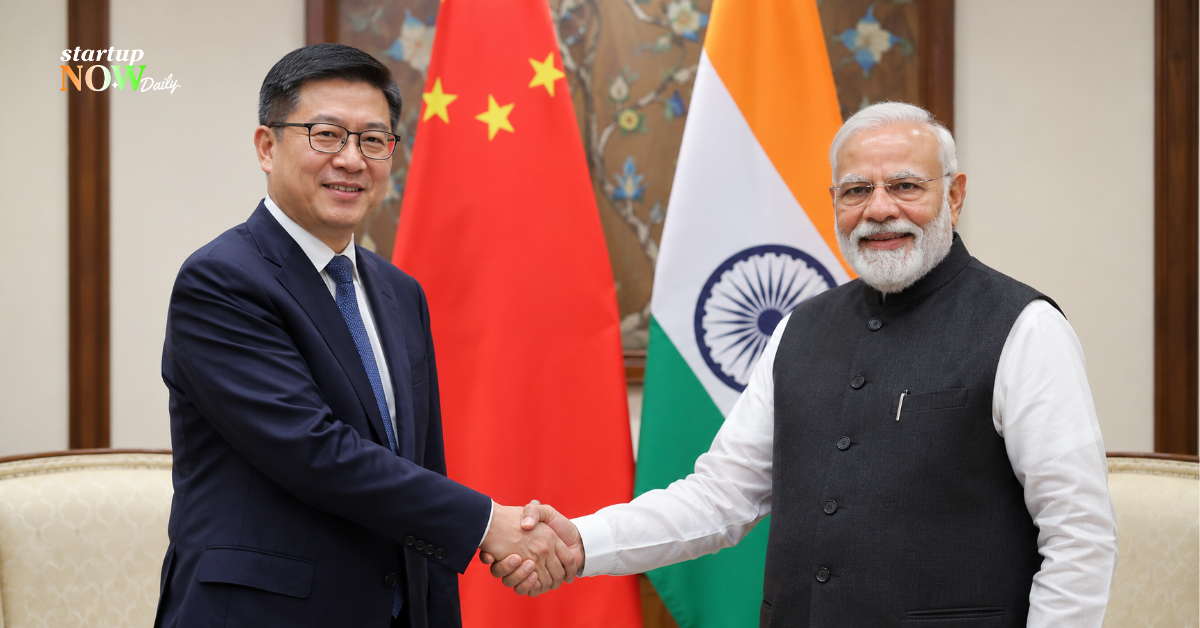
India is set to approve a $370 million investment by Horse Powertrain Ltd., a hybrid engine joint venture backed by China’s Zhejiang Geely Holding Group and French automaker Renault, marking one of the largest manufacturing investments involving a Chinese-linked company since New Delhi tightened foreign investment rules in 2020.
The proposed investment signals a gradual thaw in India-China business relations as the government selectively opens the door for investments that strengthen domestic manufacturing capabilities and reduce import dependence.
If approved, the investment will enable Horse Powertrain to establish advanced hybrid powertrain manufacturing operations at Renault’s production facilities in India, reinforcing the country’s ambitions of becoming a global automotive manufacturing hub.
What Is Horse Powertrain And Who Owns It?
Horse Powertrain was established in 2024 as a global powertrain technology company through an equal joint venture between Renault SA and Zhejiang Geely Holding Group.
Saudi Aramco later acquired a 10% stake, leaving Renault and Geely with 45% ownership each.
Headquartered in London, the company operates 18 manufacturing facilities worldwide and employs approximately 19,000 people. It focuses on developing advanced internal combustion engines, hybrid powertrains, and low-emission propulsion technologies for global automobile manufacturers.
The company has positioned itself as a leading supplier of hybrid propulsion systems as global demand shifts toward cleaner mobility solutions.
How Will The Investment Be Deployed In India?
According to people familiar with the matter, Horse Powertrain plans to invest in phases, beginning with Renault’s Chennai manufacturing facility in Tamil Nadu.
The company intends to manufacture advanced strong hybrid powertrains, combining conventional internal combustion engines with electric motors and battery systems.
Initially, these hybrid engines will power upcoming Renault and Nissan vehicles manufactured in India, while discussions are also underway to supply powertrain systems to other automobile manufacturers operating in the country.
Industry sources indicate that Renault’s upcoming Duster SUV, expected to launch later this year, could become one of the first vehicles to feature locally manufactured Horse hybrid powertrains.
Why Is This Investment Significant For India?
The proposed approval represents one of the first major Chinese-linked manufacturing investments since India relaxed certain foreign investment norms for neighbouring countries earlier this year.
Following border tensions with China in 2020, India introduced stricter scrutiny for investments originating from countries sharing land borders with the country. The policy significantly slowed Chinese investments across multiple sectors.
The last major investment by a Chinese automaker came in 2017, when state-owned SAIC Motor acquired General Motors’ manufacturing plant in India to launch the MG Motor brand.
Since then, large scale investments involving Chinese companies have remained limited, with India also restricting electric vehicle manufacturer BYD’s expansion plans in the country.
The Horse proposal indicates a more calibrated approach, where investments that support manufacturing, technology transfer, and employment generation are receiving favourable consideration.
Why Are Hybrid Vehicles Becoming More Important?
The investment also highlights India’s growing focus on hybrid vehicle technology.
While electric vehicle adoption continues to expand, hybrid vehicles are increasingly emerging as an attractive alternative for consumers seeking improved fuel efficiency without concerns around charging infrastructure.
Strong hybrid systems combine petrol engines with electric motors, allowing vehicles to operate on electric power during low-speed driving while switching seamlessly to conventional engines when required.
As fuel prices remain volatile and emission norms become more stringent, automakers are accelerating investments in hybrid technology to bridge the transition toward full electrification.
Industry analysts believe hybrid vehicles could play a crucial role in India’s evolving mobility landscape over the next decade.
How Does This Fit Into Renault And Nissan’s India Strategy?
Renault and Nissan have been restructuring their India operations after years of modest market performance.
The alliance is now focusing on expanding its SUV portfolio while increasing localisation of components and manufacturing.
The proposed Horse investment is expected to reduce reliance on imported powertrain technologies while strengthening domestic production capabilities.
Local manufacturing of hybrid engines could improve cost competitiveness, enhance supply chain resilience, and support future exports from India.
Horse Powertrain also confirmed that it has formally submitted its investment application to Indian authorities and expects a decision soon.
What Could This Mean For India’s Auto Manufacturing Sector?
If approved, the investment would further strengthen India’s position as a global automotive manufacturing destination.
The country has increasingly attracted multinational manufacturers looking to diversify production away from traditional manufacturing hubs while serving one of the world’s fastest-growing automobile markets.
The addition of advanced hybrid powertrain manufacturing would also deepen India’s automotive technology ecosystem by expanding local production of high-value components.
As the government continues promoting domestic manufacturing under initiatives such as Make in India and Atmanirbhar Bharat, investments in advanced mobility technologies are expected to play an increasingly important role in shaping the future of India’s automobile industry.