
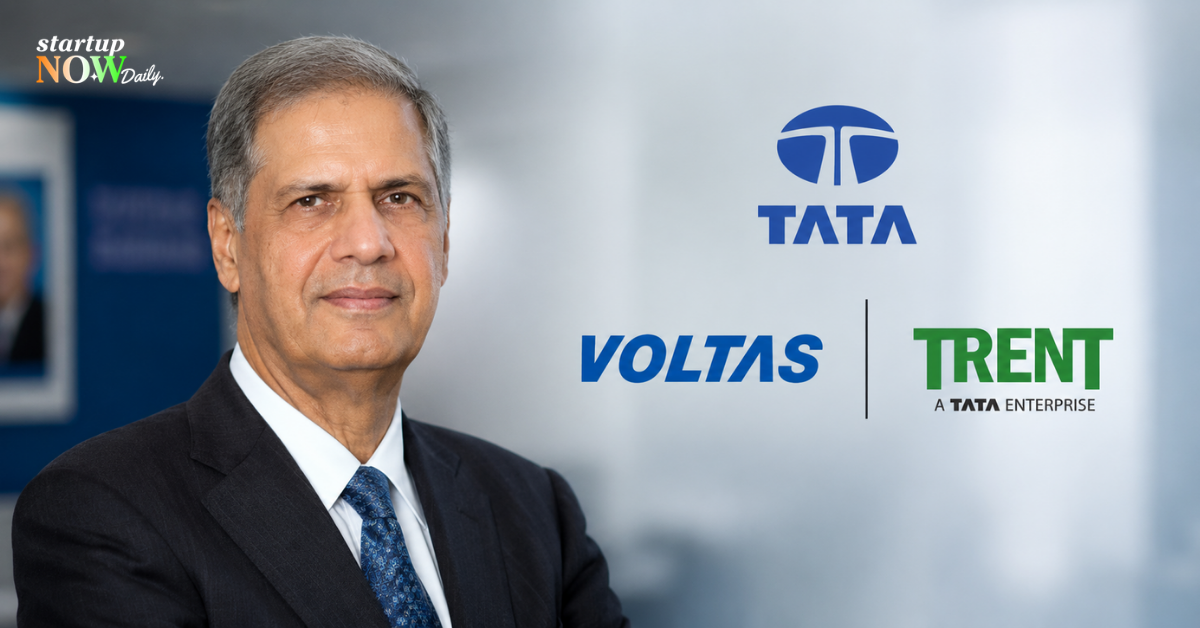
Why Has Noel Tata Announced His Exit as Voltas Chairman?
Veteran Tata Group leader Noel Tata has announced that he will step down as the Chairman of Voltas, marking another major leadership transition within the conglomerate. The announcement came during the company’s 72nd Annual General Meeting (AGM), just a week after he revealed his decision to relinquish the chairmanship of Trent.
Addressing shareholders, the 69 year old executive said the AGM would be his last as Chairman of Voltas. He thanked shareholders, employees, and business partners for their continued trust and support while expressing confidence that the company is well positioned for its next phase of growth under a new generation of leadership.
How Did Noel Tata Shape Voltas During His Leadership?
Noel Tata joined the Voltas board in January 2003 and became its Non-Executive Chairman in September 2017, succeeding Ishaat Hussain. During his tenure, the company strengthened its position as one of India’s leading cooling solutions providers while expanding its presence across consumer appliances, engineering solutions, and project businesses.
Speaking at the AGM, Tata highlighted that Voltas entered the new financial year on a strong footing. He noted that the company’s room air-conditioner business crossed the milestone of selling one million units in just 81 days, reinforcing its leadership in India’s air-conditioning market.
He also emphasised that the company has built a capable leadership team through internal promotions and strategic lateral hiring, ensuring continuity as the business prepares for future opportunities.
Why Is the Tata Group Undergoing Leadership Transitions?
Noel Tata’s decision follows a series of leadership changes across Tata Group companies. Earlier in June, he announced his exit as Chairman of Trent, another listed Tata company where he played a key role in building one of India’s fastest-growing retail businesses.
The transition comes as Noel Tata approaches the age of 70, a milestone he will reach in November this year. The Companies Act, 2013 places age related provisions on the appointment and continuation of certain executive leadership positions, although Noel Tata currently serves in several non-executive capacities across Tata Group companies.
The leadership changes are widely viewed as part of the group’s long-term succession planning, ensuring that experienced executives gradually hand over responsibilities to the next generation of leaders while maintaining governance continuity.
What Roles Will Noel Tata Continue to Hold?
Despite stepping down as Chairman of Voltas and Trent, Noel Tata will continue to play an influential role within the Tata Group. He currently serves as the Chairman of Tata Trusts, the principal shareholder of Tata Sons, and also holds leadership positions across several Tata companies.
His current responsibilities include serving as Chairman of Tata Investment Corporation, Tata International, Trent Hypermarket, and Tata International West Asia DMCC. He is also the Vice Chairman of Tata Steel and Titan Company, reflecting his continued importance in shaping the group’s long term strategic direction.
With more than four decades of association with the Tata Group, Noel Tata remains one of the most experienced business leaders within the organisation.
What Does This Mean for Voltas and Investors?
Leadership transitions at established companies often attract investor attention, but Voltas has indicated that succession planning has been carefully managed. Noel Tata stated that the company has developed a strong leadership pipeline capable of driving future growth across its businesses.
For investors, the focus will now shift to the appointment of a new chairman and the company’s ability to maintain its market leadership in India’s rapidly growing cooling and home appliances sector. As demand for air conditioners and energy efficient products continues to rise, Voltas appears well-positioned to build on the operational foundation established during Noel Tata’s tenure.
The transition also reflects the Tata Group’s broader commitment to structured succession planning, ensuring stability while preparing its businesses for the next phase of growth.