
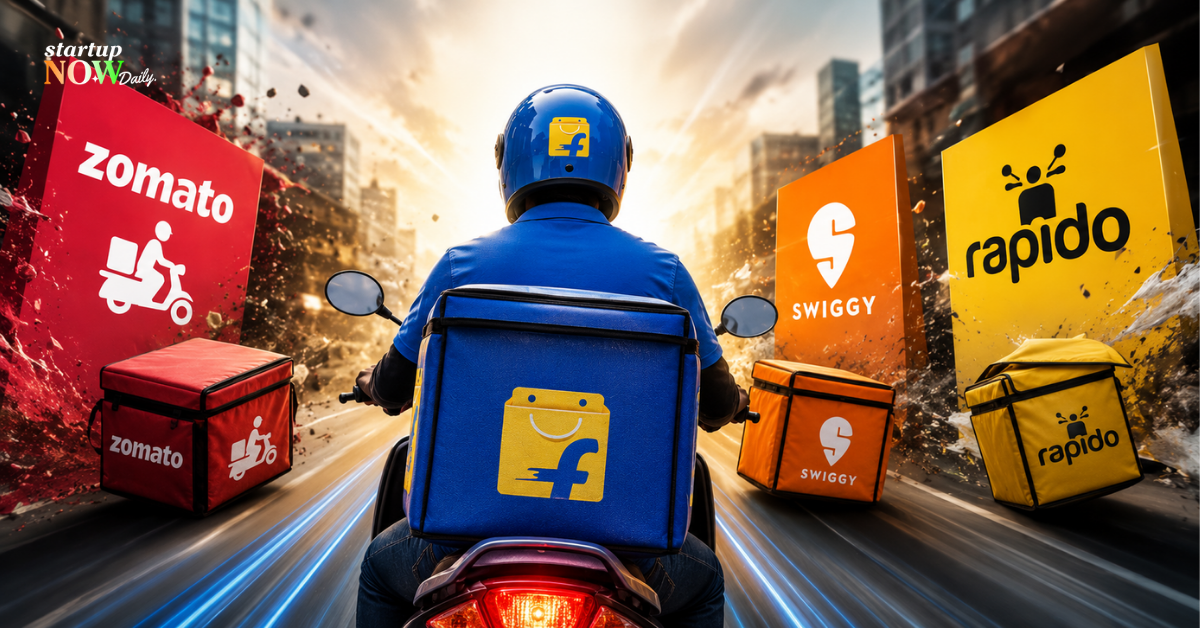
Walmart-Owned E-commerce Giant to Pilot Food Delivery with ONDC Integration
Flipkart, India’s leading e-commerce platform owned by Walmart, is preparing to enter the country’s highly competitive online food delivery market, setting the stage for a direct challenge to established players such as Zomato, Swiggy, and emerging competitor Rapido.
The announcement was confirmed by Flipkart Group CEO Kalyan Krishnamurthy, who revealed that food delivery will become a new service within Flipkart’s growing digital ecosystem. The company plans to launch a pilot in the coming weeks before deciding on a wider national rollout based on customer feedback and operational performance.
The move marks Flipkart’s latest expansion beyond traditional e-commerce as it continues building a multi-service consumer platform.
Food Delivery to Be Integrated into Flipkart
According to Krishnamurthy, food delivery will be introduced as another use case within Flipkart’s existing app rather than operating solely as a standalone platform.
Sources indicate that the company will also experiment with a dedicated food delivery app while simultaneously offering the service through the main Flipkart application.
This dual-platform strategy is expected to help the company understand customer preferences before scaling the business across multiple cities.
By leveraging its existing customer base, Flipkart hopes to reduce customer acquisition costs while increasing engagement within its ecosystem.
Strong Focus on ONDC
A key differentiator in Flipkart’s food delivery strategy is expected to be its integration with the Open Network for Digital Commerce (ONDC), the government backed initiative designed to create an open digital commerce network.
According to sources familiar with the plans, Flipkart intends to build deep integration with ONDC, allowing it to connect with restaurants and delivery partners through the open network.
Industry observers believe ONDC integration could provide greater flexibility, wider merchant participation, and potentially lower operating costs compared to conventional marketplace models.
Bengaluru Likely to Be the First Launch City
Flipkart is expected to begin its food delivery operations with a large-scale pilot in Bengaluru.
The city has one of India’s most mature online food delivery markets and offers an ideal testing ground because of its high digital adoption and large base of frequent food delivery users.
Sources suggest Flipkart intends to launch at meaningful scale from the outset to meet customer expectations associated with the Flipkart brand before expanding to additional cities.
The company’s expansion strategy will depend on customer response, operational efficiency, and lessons learned during the initial rollout.
Part of Flipkart’s Larger Ecosystem Strategy
The food delivery business aligns with Flipkart’s broader strategy of creating a comprehensive consumer ecosystem.
Over the past few years, the Flipkart Group has expanded into multiple digital services, including:
- Myntra for fashion and lifestyle
- Cleartrip for travel bookings
- super.money for financial services
- Flipkart Minutes for quick commerce and grocery delivery
Adding food delivery further strengthens the company’s ambition to become a one-stop destination for consumers across shopping, travel, payments, groceries, and everyday services.
Competition in India’s Food Delivery Market
Flipkart’s entry comes at a time when India’s online food delivery industry is witnessing increased competition and experimentation.
The market continues to be dominated by Zomato and Swiggy, which together account for the majority of online food orders across the country.
However, newer entrants are introducing alternative business models to attract restaurants and consumers.
Recently, ride hailing platform Rapido launched Ownly, a zero-commission food delivery platform designed to keep menu prices closer to offline rates.
Swiggy has also introduced Toing, a service focused on delivering greater value to price-sensitive customers.
Flipkart’s large customer base, logistics network, and ecosystem advantages could make it a significant new competitor in the sector.
Outlook
Flipkart’s planned entry into food delivery signals another major shift in India’s rapidly evolving digital commerce landscape.
With millions of existing users, an extensive logistics infrastructure, and planned integration with ONDC, the company is well positioned to compete in one of the country’s fastest-growing consumer internet categories.
While Zomato and Swiggy remain the dominant players, Flipkart’s ecosystem approach and multi-service strategy could reshape competitive dynamics in the coming years.
The success of the pilot launch will determine how aggressively the company expands its food delivery operations across India.