
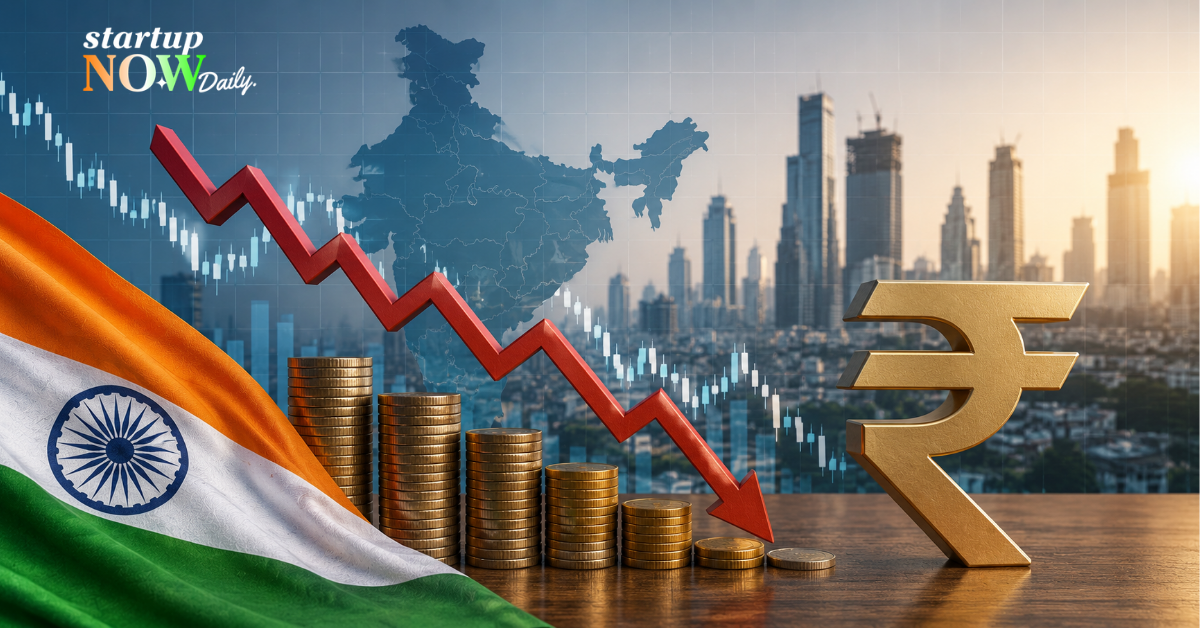
Fitch Group Unit Flags Inflation, Weak Consumption And Global Risks As Key Challenges
India’s economic growth is expected to moderate in FY27 despite remaining one of the world’s fastest-growing major economies, according to BMI, a Fitch Group company.
The research firm has projected India’s GDP growth at 6.6% for FY27, lower than the 7.7% expansion recorded in FY26. While the forecast indicates a slowdown, it still remains above India’s average annual growth rate of 6.1% over the past decade and is in line with the Reserve Bank of India’s growth estimate for the current fiscal year.
According to official government data released last week, India’s GDP growth accelerated to 7.7% in FY26 from 7.1% in FY25, supported by strong domestic consumption and robust investment activity.
Why Does BMI Expect Growth To Slow?
BMI believes three major factors could weigh on economic momentum during FY27.
The first is the fading impact of GST reforms introduced in September 2025. Those reforms triggered a consumption surge during the December quarter of FY26, but spending momentum weakened later. Consumption growth slowed by 1.1 percentage points to 7.1% year-on-year in the March quarter.
Secondly, rising inflation is expected to put pressure on household spending. BMI forecasts inflation to reach 5.3% in FY27, partly due to energy market disruptions linked to tensions in West Asia and concerns surrounding the Strait of Hormuz.
The third factor is slower investment growth. Although BMI does not expect immediate pressure from interest rates, businesses could become more cautious amid global uncertainty and weaker demand conditions.
Rupee Weakness Could Support Exports
BMI expects the Indian rupee to trade around 95.1 against the US dollar during the calendar year.
The depreciation from the average level of 87 in 2025 could improve export competitiveness and help offset some of the economic pressure created by higher energy costs and global trade disruptions.
According to the report, stronger exports may partially cushion the impact of external shocks on India’s economy.
RBI Policy Support Remains A Positive
Despite forecasting slower growth, BMI highlighted that the RBI’s monetary easing measures should continue supporting economic activity.
The central bank reduced policy rates by a cumulative 125 basis points during 2025, creating a low-interest-rate environment that could help businesses and consumers navigate ongoing global challenges.
BMI also noted that any future rate hikes would likely have a larger impact on FY28 growth rather than the current fiscal year.
India Expected To Remain Among Fastest-Growing Economies
While growth is projected to moderate, India is still expected to outperform most major economies globally.
Strong domestic demand, export opportunities, infrastructure spending, and supportive monetary policy continue to provide a solid foundation for growth.
However, economists will closely monitor inflation trends, crude oil prices, consumer spending patterns, and geopolitical developments in West Asia, as these factors are likely to play a crucial role in shaping India’s economic performance during FY27.