
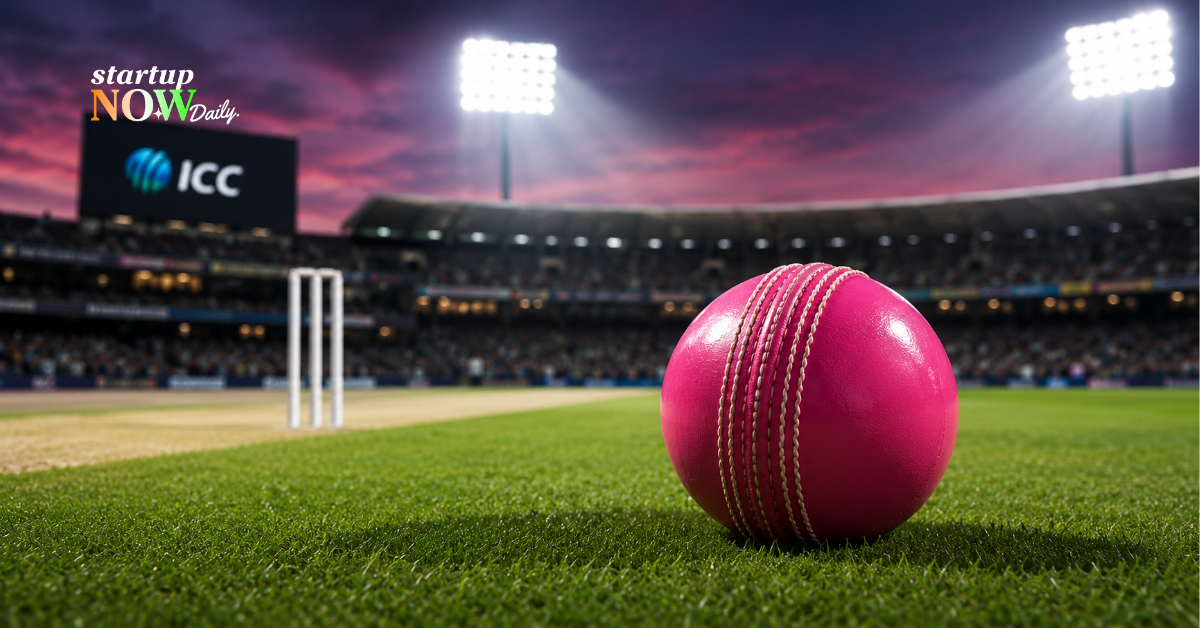
How Will The ICC’s New Pink Ball Trial Work?
The International Cricket Council (ICC) has approved a trial allowing the use of pink balls in Test cricket when bad light threatens to reduce playing time, marking one of several significant changes announced during its annual board meeting in Ahmedabad.
The initiative is aimed at maximizing playing time in Test matches that would otherwise be interrupted due to fading natural light. Under the new trial, Test matches will continue to begin with the traditional red ball. However, if deteriorating light conditions make it difficult to continue play, teams may switch to a pink ball and continue under floodlights.
The provision will only apply if both participating teams agree to the arrangement before the start of a Test series.
Why Is The ICC Introducing This Rule?
Bad light has long been one of the most debated issues in Test cricket. Matches are frequently interrupted or halted early because umpires determine that visibility is insufficient for players, particularly batters.
The ICC believes the pink-ball option could help reduce lost playing time while preserving the integrity of the contest. Since pink balls are designed to remain more visible under artificial lighting, they offer a practical solution when natural light fades late in the day.
For example, if only 75 overs have been bowled out of a scheduled 90-over day and poor light threatens an early finish, the remaining overs could be completed using a pink ball under floodlights.
Will Technology Also Help Reduce Bad-Light Interruptions?
Alongside the pink-ball trial, the ICC has approved a joint research initiative with Marylebone Cricket Club (MCC) to study lighting technologies that could help reduce disruptions caused by poor visibility.
The governing body said it will co-fund research and development projects aimed at identifying solutions for venues and match officials dealing with light-related challenges.
The move reflects cricket’s growing willingness to embrace technology to improve match continuity and spectator experience.
What Other Major Changes Did The ICC Approve?
The ICC Board also approved several updates to international playing conditions.
Head coaches and designated team representatives will now be allowed to enter the field during scheduled drinks breaks. The change is designed to improve communication between players and coaching staff during matches.
The Board also approved mandatory 15-minute drinks intervals in T20 Internationals and introduced stricter requirements for batters to be ready when play resumes.
How Will Hawk-Eye Be Used For Suspect Bowling Actions?
In another significant decision, the ICC approved the use of Hawk-Eye data by match officials when assessing potentially illegal bowling actions.
Officials will now be able to access technological data while deciding whether a bowler should be reported for a suspect action. The move is expected to improve consistency and accuracy in evaluating bowling legality.
What Other Decisions Were Taken?
The ICC has permanently adopted the leg-side wides trial following its successful implementation period in international cricket.
The Board also suspended Cricket Canada for serious breaches of membership obligations, although Canadian national teams will remain eligible to participate in ICC events during the suspension period.
In women’s cricket, the ICC shifted the Women’s Champions Trophy 2027 to February 14-28, 2027, and confirmed the launch of the Women’s Emerging Nations Trophy 2026, a new 10-team competition featuring Full Members and Associate nations.
All the newly approved playing-condition changes will come into effect from October 1, 2026.