
Why Is India Seeking Fresh Funding From Multilateral Lenders?
India is in discussions with major multilateral institutions to secure approximately $2.5 billion in fresh funding as the government looks to sustain infrastructure investments and job creation amid growing fiscal pressures.
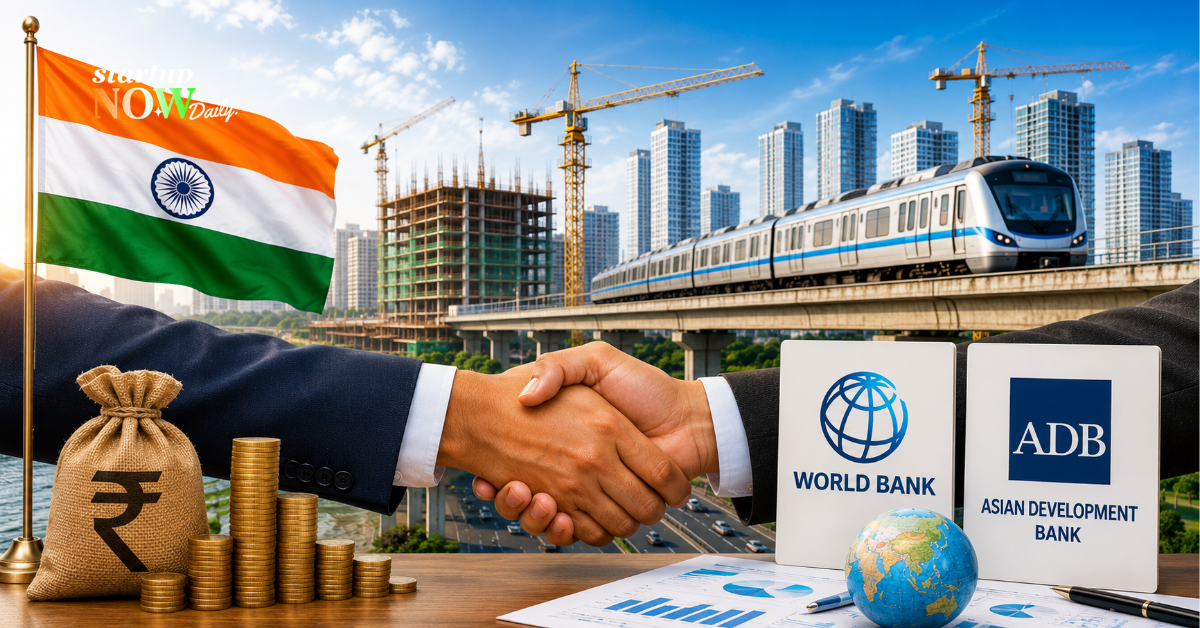
According to people familiar with the matter, New Delhi is negotiating with the World Bank and the Asian Development Bank (ADB) for loans worth $1.5 billion and $1 billion, respectively. The funding is expected to support urban infrastructure projects, employment generation initiatives, and broader economic development programs.
The proposed loans come at a time when the government is facing pressure on public finances following a rise in subsidy expenditure triggered by higher global crude oil prices.
How Will The Proposed Funding Be Utilized?
The fresh capital is expected to strengthen ongoing government programs focused on urban development and infrastructure modernization.
Officials familiar with the discussions indicated that the funding will primarily support projects aimed at improving urban infrastructure, enhancing public services, and creating employment opportunities.
The loans are also expected to complement India’s long-term economic development agenda, which seeks to transform the country into a developed economy by 2047.
Infrastructure development remains a central pillar of the government’s growth strategy, with significant investments planned across transportation, urban renewal, logistics, housing, and public services.
What Is The World Bank’s Existing Commitment To India?
The proposed financing forms part of a broader partnership between India and the World Bank Group.
Earlier, India and the World Bank announced an agreement under which the institution would provide annual financing of $8 billion to $10 billion over a five-year period.
Sources indicate that the latest $1.5 billion funding package being discussed falls within this broader commitment framework.
In a statement, the World Bank confirmed ongoing discussions with the Indian government regarding potential support for structural reforms designed to stimulate private sector employment and strengthen economic growth.
However, the institution did not disclose specific loan amounts under negotiation.
Why Does India Need Additional Funding Now?
The funding discussions come against the backdrop of increasing fiscal pressures on the Indian government.
Higher crude oil prices resulting from the conflict in West Asia have significantly increased India’s fuel and fertilizer subsidy burden.
As the world’s third-largest oil importer, India relies on overseas suppliers for more than 80% of its crude oil requirements.
The rise in energy prices has widened government expenditure commitments, limiting the fiscal space available for large-scale infrastructure investments and development projects.
As a result, policymakers are increasingly looking at multilateral financing institutions to support priority spending without placing additional strain on public finances.
How Has The West Asia Conflict Impacted India’s Budget?
The recent geopolitical tensions in West Asia led to sharp volatility in global energy markets, pushing crude oil prices higher.
The increase directly affected India’s import bill and forced the government to allocate more resources toward fuel related subsidies and support measures.
This has contributed to a wider-than-expected budget gap during the initial months of the financial year.
While the recent ceasefire agreement between the United States and Iran has improved market sentiment, policymakers continue to remain cautious about future energy price fluctuations.
What Role Does The Asian Development Bank Play In India?
The Asian Development Bank has been one of India’s most significant development partners for several decades.
As of December 2025, the Manila-headquartered institution had committed 683 public-sector loans, grants, and technical assistance projects worth approximately $63.8 billion in India.
ADB financing has supported sectors ranging from transportation and urban infrastructure to renewable energy, healthcare, education, and financial inclusion.
The proposed $1 billion funding package would further strengthen the institution’s long-standing engagement with India’s development agenda.
How Important Is India To The World Bank?
India remains the World Bank Group’s largest client globally.
According to the World Bank’s official data, the institution currently has commitments worth nearly $37 billion across various projects through the International Bank for Reconstruction and Development (IBRD) and the International Finance Corporation (IFC).
The relationship covers a broad range of sectors, including infrastructure, urban development, agriculture, climate resilience, digital transformation, healthcare, and education.
The latest discussions underscore the continued importance of multilateral financing in supporting India’s long-term growth ambitions.
What Does This Mean For India’s Infrastructure Push?
The proposed funding could provide a timely boost to the government’s infrastructure expansion plans.
Prime Minister Narendra Modi’s administration has consistently emphasized infrastructure development as a key driver of economic growth, job creation, and competitiveness.
Additional funding from the World Bank and ADB would help sustain momentum in critical urban and infrastructure projects while reducing pressure on domestic public finances.
As India continues its journey toward becoming a developed economy by 2047, access to long-term, low-cost development financing is expected to remain a crucial component of its growth strategy.