
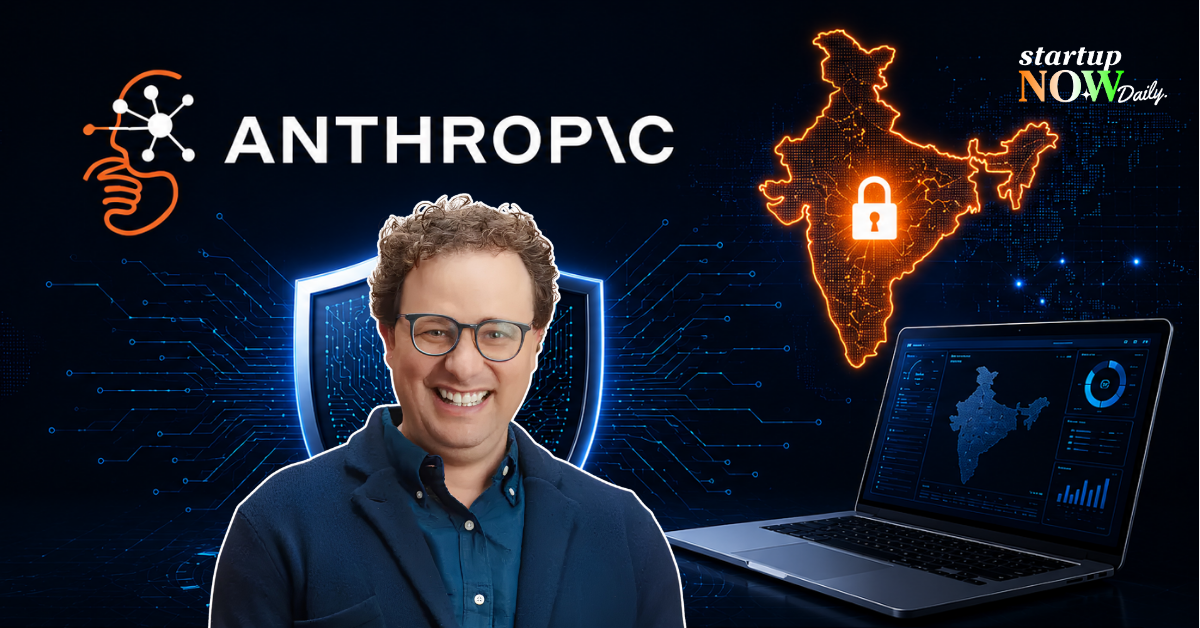
What Is Anthropic’s Mythos AI Model?
Artificial intelligence company Anthropic has expanded access to its advanced cybersecurity-focused AI model, Mythos, bringing India into a select group of countries allowed to use the powerful technology.
Mythos is designed to identify software vulnerabilities, detect security weaknesses, and help organizations patch critical cyber threats before they can be exploited. Anthropic has previously described the model as highly capable and potentially risky if released without restrictions, citing concerns that it could be misused by malicious actors.
The expansion is being carried out through Anthropic’s cybersecurity initiative, Project Glasswing.
Why Is India’s Inclusion Significant?
India is among more than 15 countries that have now been granted access to Mythos under the expanded Project Glasswing program.
The move marks a significant development for India’s cybersecurity ecosystem as organizations handling critical infrastructure increasingly face sophisticated cyber threats.
Alongside India, Anthropic has expanded access to countries including Canada, Australia, New Zealand, France, Germany, Italy, Switzerland, the Netherlands, Spain, Belgium, Sweden, Japan, and South Korea.
The initiative also includes the North Atlantic Treaty Organization, highlighting the strategic importance of the technology for national security and critical infrastructure protection.
Which Organizations Will Use Mythos?
The expanded program includes several global technology, cybersecurity, and financial infrastructure organizations.
Participants include Okta, Samsung Electronics, SK Hynix, and SK Telecom.
Financial infrastructure providers such as Euroclear, Intercontinental Exchange, and SWIFT have also joined the initiative.
Additionally, the European Union Agency for Cybersecurity is among the organizations gaining access to the model.
Why Is Anthropic Expanding Project Glasswing?
According to Anthropic, the primary goal is to help organizations whose systems are critical to public safety and economic stability.
The company stated that participating organizations share one common factor: a successful cyberattack on their software systems could have catastrophic consequences.
Anthropic estimates that many of these organizations serve infrastructures affecting more than 100 million people, making proactive vulnerability detection a matter of national and global security.
The latest expansion also broadens the program beyond technology and financial services into sectors such as healthcare, energy, water, communications, and hardware.
Why Was Mythos Initially Restricted?
Anthropic launched Claude Mythos Preview in April but limited access to around 50 predominantly US-based organizations.
The company cited concerns surrounding the model’s advanced coding and cybersecurity capabilities, which could potentially be leveraged for offensive hacking activities if widely available.
The restricted rollout triggered concerns among governments, regulators, banks, and critical infrastructure operators outside the United States who sought access to the technology or requested insights into vulnerabilities identified by the system.
Prior participants included major organizations such as Microsoft, Apple, Oracle, JPMorgan Chase, and CrowdStrike.
What Does This Mean For India?
India’s inclusion in Project Glasswing could strengthen cybersecurity capabilities across critical sectors such as banking, telecommunications, healthcare, digital infrastructure, and government systems.
As cyberattacks become increasingly sophisticated and AI-driven, access to advanced defensive technologies like Mythos may help organizations identify vulnerabilities earlier and improve resilience against emerging threats.
The announcement also comes at a pivotal moment for Anthropic, which recently filed for an IPO that could value the company at more than $1 trillion, underscoring the growing strategic importance of AI-powered cybersecurity solutions worldwide.