
Why Is Tata Motors Reimagining The Car As A Software Platform?
The future of automobiles is no longer being shaped solely by engines, batteries or manufacturing scale. Increasingly, software is becoming the defining factor that determines how vehicles perform, evolve and interact with drivers.
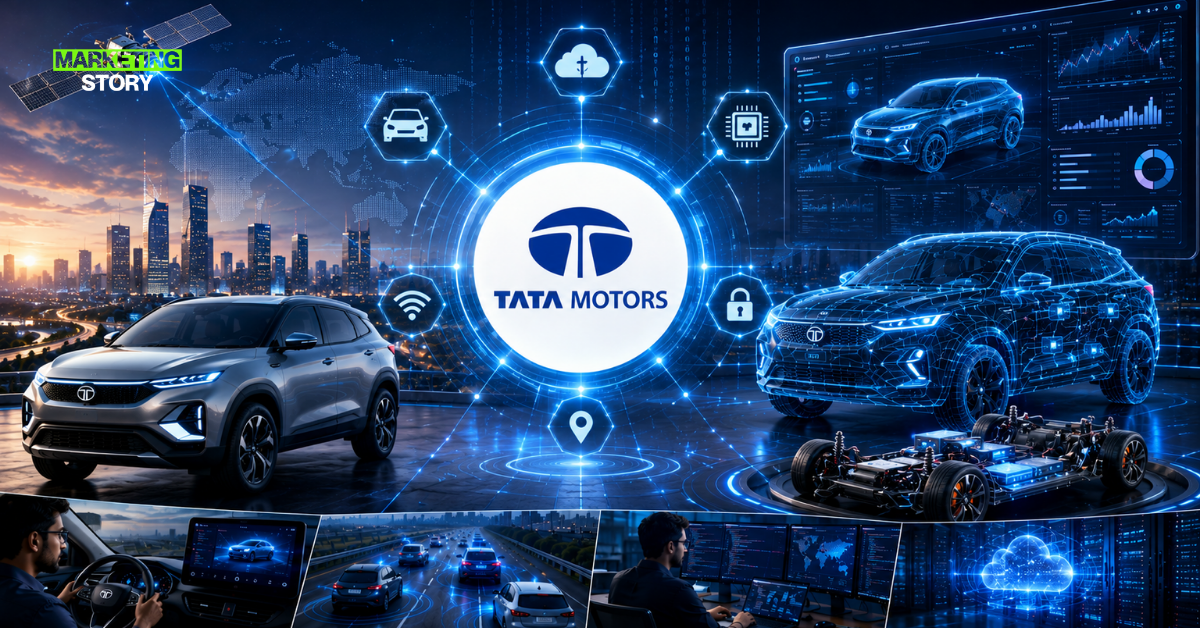
Recognising this shift, Tata Motors Passenger Vehicles (TMPVL) is accelerating its transition towards software defined vehicles (SDVs), with all future vehicle platforms expected to be built around its proprietary t.idal architecture.
The strategy, detailed in the company’s FY26 annual report, marks one of the most ambitious technology transformations undertaken by an Indian automaker and positions Tata Motors to compete in a global automotive landscape increasingly driven by software, connectivity and artificial intelligence.
What Is Tata Motors’ t.idal Architecture?
At the heart of Tata Motors’ software-defined vehicle strategy lies t.idal, a proprietary software and electronic architecture designed to decouple software from vehicle hardware.
Traditionally, automotive functions such as infotainment, safety systems, navigation, connectivity and vehicle controls have been closely tied to dedicated hardware components. The t.idal platform seeks to change this by creating a common software backbone capable of supporting multiple vehicle functions and receiving upgrades throughout a vehicle’s lifecycle.
According to the company, the long-term objective is to abstract software from the underlying hardware architecture, enabling features and capabilities to evolve through software updates rather than requiring hardware replacements.
This approach mirrors the strategy adopted by global automotive leaders that increasingly view vehicles as digital platforms rather than static products.
Why Are Software-Defined Vehicles Becoming The Industry Standard?
Software-defined vehicles are fundamentally changing how cars are designed, sold and experienced.
Instead of relying solely on physical upgrades, manufacturers can continuously improve vehicles through over-the-air (OTA) updates, adding new features, improving performance and enhancing safety systems long after a vehicle has been delivered.
This model creates significant benefits for both consumers and automakers.
Customers gain access to evolving functionality, while manufacturers can generate recurring revenue through software-enabled services and feature subscriptions.
Tata Motors described SDVs as a “foundational shift” in automotive development and a core pillar of its future product strategy.
How Is Artificial Intelligence Shaping Tata Motors’ Future Vehicles?
A critical component of the company’s software strategy is its collaboration with Jaguar Land Rover’s technology partner, NVIDIA.
The partnership focuses on developing next-generation electric vehicles powered by the NVIDIA DRIVE software-defined platform.
What Technologies Are Being Developed?
According to Tata Motors, future vehicle programs will leverage AI-driven technologies to support:
- Advanced driver-assistance systems (ADAS)
- Automated driving capabilities
- Intelligent parking functions
- Driver and occupant monitoring systems
- Active safety technologies
- Advanced environmental visualisation systems
These capabilities are expected to significantly improve vehicle intelligence while enhancing both safety and user experience.
The company is also utilizing NVIDIA Omniverse technology to create digital twins of manufacturing facilities and streamline vehicle design processes through simulation based engineering.
How Much Is Tata Motors Investing In Its Software Future?
The transformation is being supported by substantial research and development investments.
During FY26, Tata Motors Passenger Vehicles spent ₹2,836 crore on research and development activities, including ₹1,936 crore in capital expenditure.
The investments were directed toward software-defined vehicle technologies, connected car systems, electrical and electronic architectures, software integration platforms, artificial intelligence tools and future mobility solutions.
The scale of spending underscores the strategic importance of software in Tata Motors’ long-term competitiveness.
Is The New Sierra The First Preview Of Tata’s Future?
One of the most significant milestones highlighted in the annual report is the launch of the new-generation Sierra.
While the vehicle revives one of Tata Motors’ most iconic nameplates, it also serves a much broader purpose.
The Sierra has been engineered on a flexible, future-ready architecture capable of supporting advanced electronics, enhanced software integration and multiple propulsion technologies.
The company views the Sierra as an early demonstration of how future Tata vehicles will be developed, integrating software, connectivity and evolving powertrain technologies into a unified platform.
How Does This Fit Into Tata Motors’ Growth Strategy?
The software roadmap complements Tata Motors’ broader multi-powertrain strategy, which includes internal combustion engine vehicles, CNG models and electric vehicles.
Chairman N Chandrasekaran said the company enters FY27 with a strong pipeline of launches and growing confidence in market demand.
Managing Director and CEO Shailesh Chandra highlighted that SUVs, CNG vehicles and EVs are expected to remain the key growth drivers despite ongoing geopolitical uncertainties.
The company’s FY26 performance supports this optimism.
Tata Motors reported CNG sales of 170,000 units during the year, while electric vehicle sales surged more than 43% year-on-year to exceed 92,000 units. The automaker retained leadership in India’s EV market with a 40.2% market share.
Can Tata Motors Become India’s Software-First Automaker?
The shift toward software-defined vehicles represents more than a technology upgrade it signals a fundamental rethinking of how vehicles are built and monetized.
As global automotive companies increasingly compete on software capabilities, Tata Motors is positioning itself at the forefront of this transformation within India.
With the t.idal architecture, deep investments in AI, strategic partnerships with NVIDIA, and a strong pipeline of connected vehicles, the company is laying the foundation for an automotive future where software becomes as important as the vehicle itself.