
Why Has TCS Been Ordered To Pay Additional Damages?
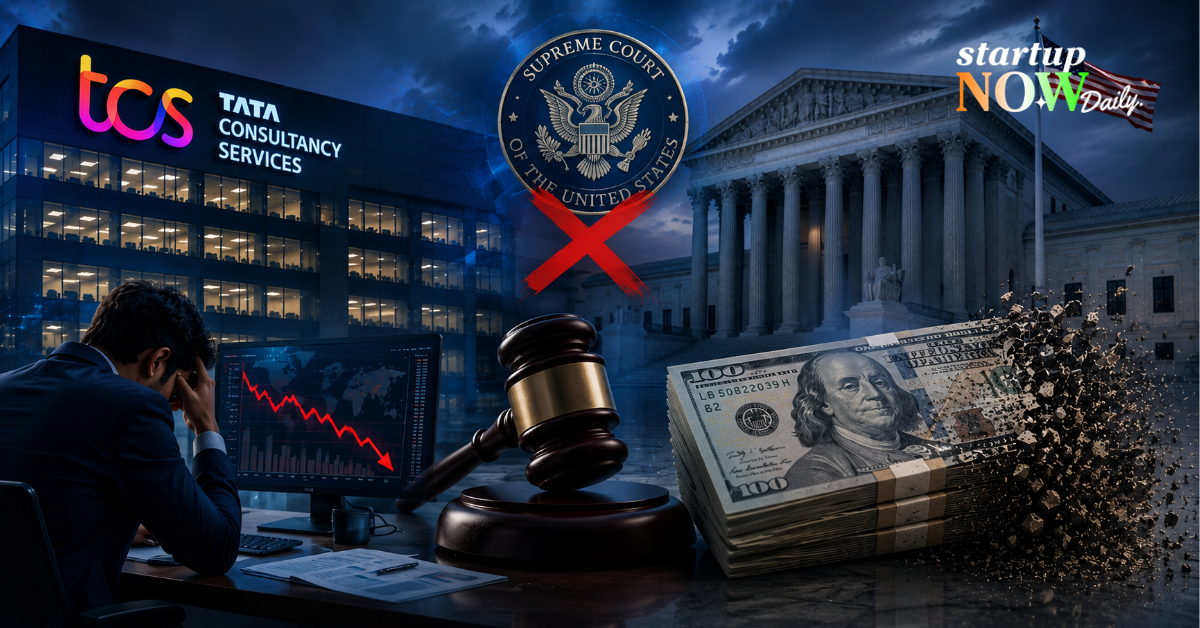
India’s largest IT services company, Tata Consultancy Services (TCS), is set to take a fresh financial hit after the US Supreme Court declined to hear its appeal in a high-profile trade secrets lawsuit brought by DXC Technology.
The decision effectively ends a years-long legal battle and leaves intact a $168 million damages award in favour of DXC Technology. As a result, TCS said it will book an additional one-time exceptional charge of $70 million during the first quarter of FY27.
Combined with the $150 million already provisioned earlier, the company’s total exposure in the case now stands at approximately $220 million, including damages, interest and legal expenses.
The ruling marks the final chapter in one of the most significant legal disputes involving an Indian IT services company in the United States.
What Was The Trade Secrets Dispute About?
The case originated in 2019 when Computer Sciences Corporation (CSC), a predecessor of DXC Technology, filed a lawsuit against TCS in a federal court in Dallas.
CSC alleged that TCS hired approximately 2,200 employees from insurance giant Transamerica and subsequently used their internal knowledge and access to develop a competing life insurance software platform.
The lawsuit accused TCS of misappropriating confidential business information and trade secrets to gain an unfair competitive advantage in the insurance technology market.
TCS consistently denied wrongdoing and challenged both the allegations and the damages awarded throughout the legal proceedings.
How Did The Case Progress Through US Courts?
After several years of litigation, a jury in 2023 found that TCS had willfully misappropriated trade secrets and recommended damages totaling $210 million.
However, US District Judge Brantley Starr later reduced the award to $168 million.
The revised damages package included:
- $56 million in compensatory damages
- $112 million in punitive damages
TCS subsequently appealed the decision before the Fifth US Circuit Court of Appeals, which upheld the lower court’s ruling in 2025.
The company then sought relief from the US Supreme Court, arguing that key legal questions regarding damages calculations warranted further review.
The Supreme Court’s refusal to hear the appeal now leaves the lower court judgment fully intact.
Why Did TCS Challenge The Damages Award?
TCS argued that DXC should not have received unjust enrichment damages without demonstrating actual financial losses resulting from the alleged conduct.
The company also maintained that the punitive damages component was excessive relative to the circumstances of the case.
According to court filings, TCS sought clarification on broader principles governing trade secret litigation and damage calculations under US law.
DXC, however, maintained that both the trial court and appellate court had correctly applied the law and argued that no further judicial review was necessary.
The Supreme Court ultimately agreed not to intervene.
How Significant Is The Financial Impact On TCS?
While the $220 million total liability is substantial, the financial impact remains manageable given TCS’s scale and profitability.
The company reported a net profit of ₹13,718 crore (approximately $1.45 billion) during the fourth quarter alone.
The additional $70 million charge will be recognized as a one-time exceptional item and is unlikely to materially affect the company’s long-term financial position.
However, the expense will impact quarterly earnings and may attract investor attention when TCS reports its FY27 first-quarter results.
What Does The Verdict Mean For Investors?
The Supreme Court’s decision removes a major legal overhang that has persisted for several years.
While the financial settlement is significant, investors often prefer clarity over prolonged litigation uncertainty.
The closure of the case allows management to focus on business operations, client relationships, digital transformation initiatives and growth opportunities without the distraction of ongoing legal appeals.
The ruling also highlights the importance of compliance frameworks, intellectual property safeguards and employee transition processes within the global technology services industry.
What Lessons Does This Hold For The IT Industry?
As technology companies increasingly compete through proprietary platforms, software solutions and industry-specific products, disputes involving trade secrets and intellectual property have become more common.
The TCS-DXC case serves as a reminder that legal risks can carry significant financial consequences even for large multinational corporations.
For Indian IT firms expanding their presence in global markets, strong governance practices and rigorous compliance standards remain critical to managing such risks.
Looking Ahead
With the Supreme Court declining further review, TCS now has certainty regarding its financial obligations in the matter.
Although the company will absorb a sizeable one-time charge, its strong profitability and balance sheet position should help mitigate the impact.
The focus for investors will now shift back to TCS’s core business performance, particularly its growth strategy in artificial intelligence, cloud services, digital transformation and enterprise technology solutions.
For one of India’s largest technology companies, the legal chapter may be over, but the case is likely to remain an important reference point in discussions around intellectual property and corporate governance in the global IT industry.