
How Does Vikram-1’s Successful Launch Mark a New Era for India’s Private Space Industry?
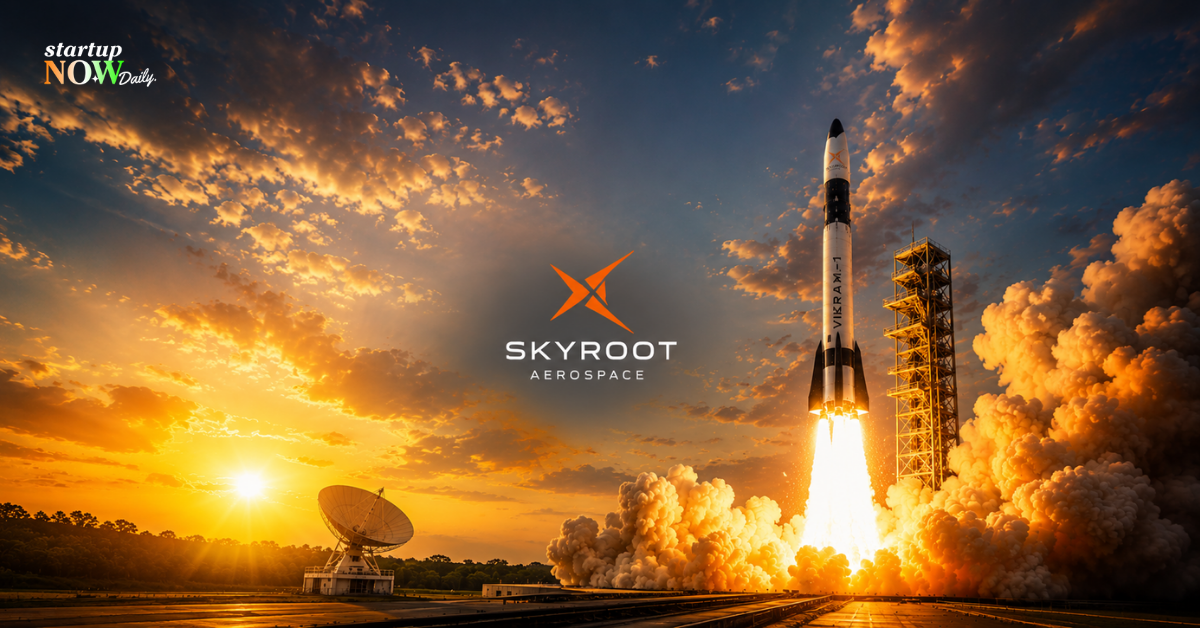
India achieved a historic milestone on Saturday as Skyroot Aerospace successfully launched Vikram-1, the country’s first privately developed orbital rocket, from the Satish Dhawan Space Centre in Sriharikota. The mission, named “Mission Aagaman”, marks India’s entry into the private orbital launch market and represents a significant step in the country’s expanding commercial space ecosystem.
The four-stage launch vehicle successfully placed multiple technology demonstration payloads into a 450-kilometre Low Earth Orbit (LEO), validating Skyroot Aerospace’s orbital launch capabilities.
The company described the mission as a “grand success”, making it one of the most significant achievements for India’s private space sector since the government opened the space industry to private participation.
What Happened During Mission Aagaman?
Vikram-1 lifted off at 12:05 PM from the First Launch Pad at Sriharikota after a brief planned hold due to a navigation-related issue.
Standing nearly seven storeys tall, the four-stage rocket ascended successfully before deploying a series of technology demonstration payloads into orbit.
The mission carried payloads from several organisations, including Grahaa Space, Cosmoserve Space, DCubed, and Skyroot Aerospace’s in-house SCOPE satellite.
Along with scientific payloads, Vikram-1 also carried unique symbolic items into space, including an 18-karat gold miniature rocket, a handwritten postcard by Prime Minister Narendra Modi carrying the message “Vande Mataram”, and postcards from engineers, scientists, and Indian astronauts.
What Payloads Were Carried on Vikram-1?
The maiden orbital mission transported multiple technology demonstration payloads designed to validate next-generation space technologies.
Among the key payloads were:
- Solaras by Grahaa Space, developed to demonstrate new capabilities in Low Earth Orbit.
- Embrace by Cosmoserve Space, showcasing robotic arm technology designed for future space debris removal missions.
- SCOPE, Skyroot Aerospace’s in-house experimental satellite for testing future space technologies.
- uD3PP and mD3RN technology payloads from German space technology company DCubed.
- Cosmic Bloom, an artistic laboratory-grown diamond payload developed by Cosmos Diamonds.
The rocket also deployed a micro-art payload featuring miniature sculptures of Dr. Vikram Sarabhai, Sir C. V. Raman, and Dr. A. P. J. Abdul Kalam, paying tribute to three pioneers of India’s scientific and space journey.
Why Is Vikram-1 a Major Technological Achievement?
The successful launch represents Skyroot Aerospace’s transition from suborbital missions to orbital launches.
In 2022, the company successfully launched Vikram-S, India’s first private suborbital rocket. Vikram-1 now becomes the company’s first orbital launch vehicle capable of placing payloads into Low Earth Orbit.
The mission also validated several advanced technologies developed by the startup, including:
- All-carbon composite rocket structure
- 3D-printed rocket engines
- Guidance, navigation, and control systems
- Multi-stage orbital launch capability
According to Skyroot Aerospace, engineering data collected during the mission will be analysed to further refine future commercial satellite launches.
Who Is Behind Skyroot Aerospace?
Skyroot Aerospace was founded by former ISRO scientists Pawan Kumar Chandana and Naga Bharath Daka, who launched the company with the objective of making satellite launches more accessible and cost-effective.
Both founders were present at ISRO’s Mission Control Centre during the historic launch.
Several prominent dignitaries also witnessed the mission, including ISRO Chairman V. Narayanan, former ISRO chiefs, astronaut Shubhanshu Shukla, and Andhra Pradesh Minister Nara Lokesh.
The successful collaboration also reflects the growing partnership between India’s public space institutions and private aerospace companies.
What Does Vikram-1 Mean for India’s Space Industry?
The success of Vikram-1 is expected to strengthen India’s position in the rapidly expanding global small satellite launch market.
With increasing demand for affordable launches of Earth observation, communication, research, and technology demonstration satellites, private launch providers are becoming an important part of the global space economy.
Skyroot’s successful orbital launch demonstrates that Indian private companies are now capable of developing and operating sophisticated launch vehicles alongside the country’s established government space programme.
The achievement also supports the Indian government’s broader vision of creating a globally competitive private space ecosystem following reforms that opened the sector to private participation.
What Comes Next for Skyroot Aerospace?
Following the successful completion of Mission Aagaman, Skyroot Aerospace is expected to analyse the mission data to optimise future launch vehicles and prepare for commercial satellite launch missions.
The engineering insights gathered from Vikram-1 will help validate critical flight systems, improve vehicle performance, and support future missions carrying commercial, scientific, and international payloads.
As demand for dedicated small satellite launches continues to grow worldwide, the successful debut of Vikram-1 positions Skyroot Aerospace as one of India’s leading private launch service providers.
The mission not only marks the arrival of India’s first private orbital rocket but also signals a new chapter in the country’s commercial space ambitions, where private innovation is expected to play an increasingly important role alongside ISRO in expanding India’s global presence in space.