
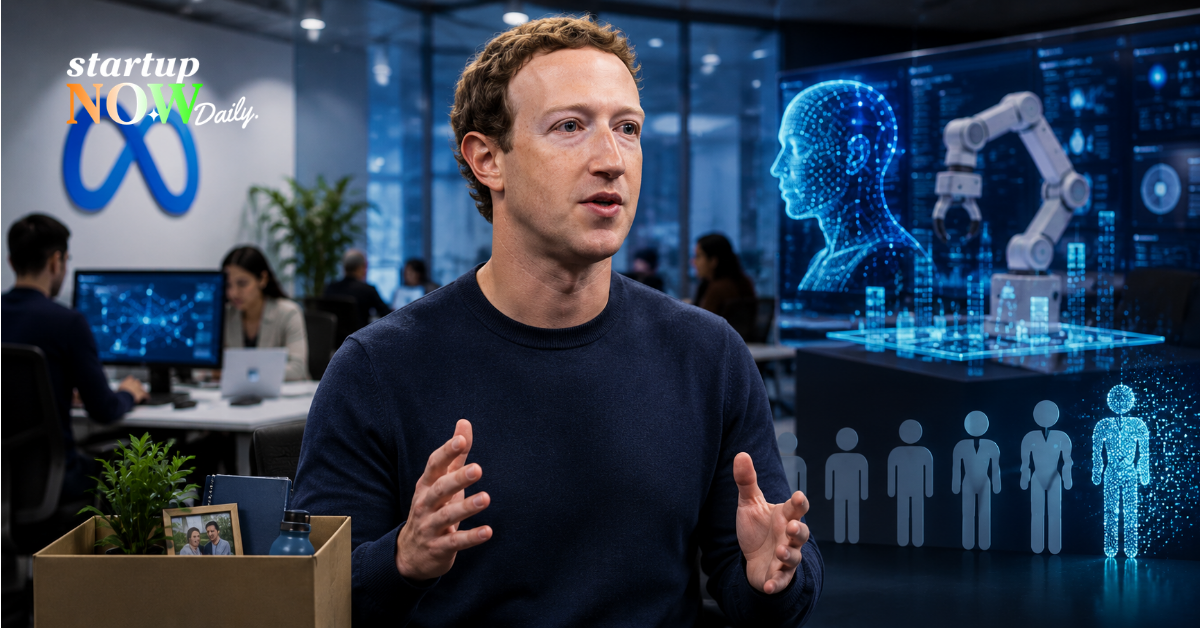
Mark Zuckerberg Says Company’s AI Transformation Has Not Been Perfect
Meta CEO Mark Zuckerberg has acknowledged that the company made mistakes while reshaping its workforce around artificial intelligence, as the tech giant continues one of the most ambitious AI-driven transformations in the corporate world.
In an internal memo seen by Reuters, Zuckerberg told employees that the rapid pace of AI development has created significant organizational challenges and that Meta’s restructuring efforts have not always gone according to plan.
“Given the complexity of these changes, we’ve made mistakes and will almost certainly make more,” Zuckerberg wrote, while emphasizing that the company remains committed to providing as much stability as possible during the transition.
The comments offer a rare public acknowledgment of the difficulties facing large technology companies as they reorganize operations around artificial intelligence.
Meta’s Massive AI Push Reshapes Workforce
Meta has emerged as one of the biggest spenders in the global AI race, committing hundreds of billions of dollars toward artificial intelligence infrastructure, talent, and product development.
The company’s transformation accelerated earlier this year when it carried out a major restructuring exercise. In May, Meta laid off around 10% of its global workforce while simultaneously reassigning approximately 7,000 employees to AI-focused initiatives and workflows.
The move reflected a broader trend across the technology industry, where companies are increasingly redirecting resources toward artificial intelligence projects while reducing investments in other areas.
According to Zuckerberg, the restructuring was designed to create new opportunities for employees while allowing the company to streamline certain teams.
New Roles For Employees Impacted By AI Changes
Despite the workforce reshuffle, Zuckerberg said Meta intends to find alternative roles for employees whose responsibilities have changed due to AI adoption.
The CEO explained that the company deliberately created new positions related to AI development and model training, allowing some employees to transition into emerging roles rather than leave the organization entirely.
“By creating important new roles for people, this also allowed us to shrink the size of teams knowing that if we make mistakes in some places, then we could transfer some people back,” Zuckerberg said.
The approach highlights Meta’s effort to balance efficiency gains from AI with workforce stability as the company adapts to changing business priorities.
No More Company-Wide Layoffs Expected This Year
One of the most notable aspects of Zuckerberg’s memo was his reassurance regarding future layoffs.
The Meta chief said the company currently does not expect to conduct additional company-wide layoffs during the remainder of the year.
However, he also cautioned employees against expecting complete certainty, noting that technological and economic changes remain largely outside the company’s control.
“I don’t want to overpromise because the world is changing in ways that are out of our control,” Zuckerberg wrote.
The statement is likely aimed at calming concerns among employees following multiple rounds of restructuring over the past few years.
Meta Plans Bigger Investments In Team Culture
Alongside its AI expansion, Meta is also increasing investments in employee engagement and collaboration.
Zuckerberg said the company plans to allocate larger budgets for offsite meetings, internal events, and team-building initiatives.
Meta is also organizing a major hackathon in July designed to encourage cross-functional collaboration and accelerate development of its latest AI models.
The company hopes these initiatives will help strengthen culture and improve coordination as teams work on increasingly complex AI projects.
Management Structure Under Review
The memo also addressed concerns surrounding Meta’s management structure.
Employees had reportedly raised issues regarding the widening span of control among managers, particularly within the company’s newly formed Applied AI Engineering division.
Reports suggest some AI teams were operating with manager-to-employee ratios as high as 1:50, creating concerns about oversight and communication.
Zuckerberg acknowledged the feedback and said Meta plans to reduce manager workloads and revisit some aspects of the structure.
AI Spending Continues To Surge
Meta’s workforce changes are closely tied to its aggressive investment strategy.
In April, the company raised its annual capital expenditure forecast to between $125 billion and $145 billion, reflecting growing investments in AI infrastructure, computing power, and data centers.
The spending places Meta among the largest AI investors globally as it competes with rivals including OpenAI, Google, Anthropic, Microsoft, and Amazon.
While Zuckerberg admits the transition has not been flawless, the memo makes clear that Meta remains fully committed to building an AI-first organization and sees artificial intelligence as central to its long-term future.