
What Did Rajnath Singh Reveal About Operation Sindoor?
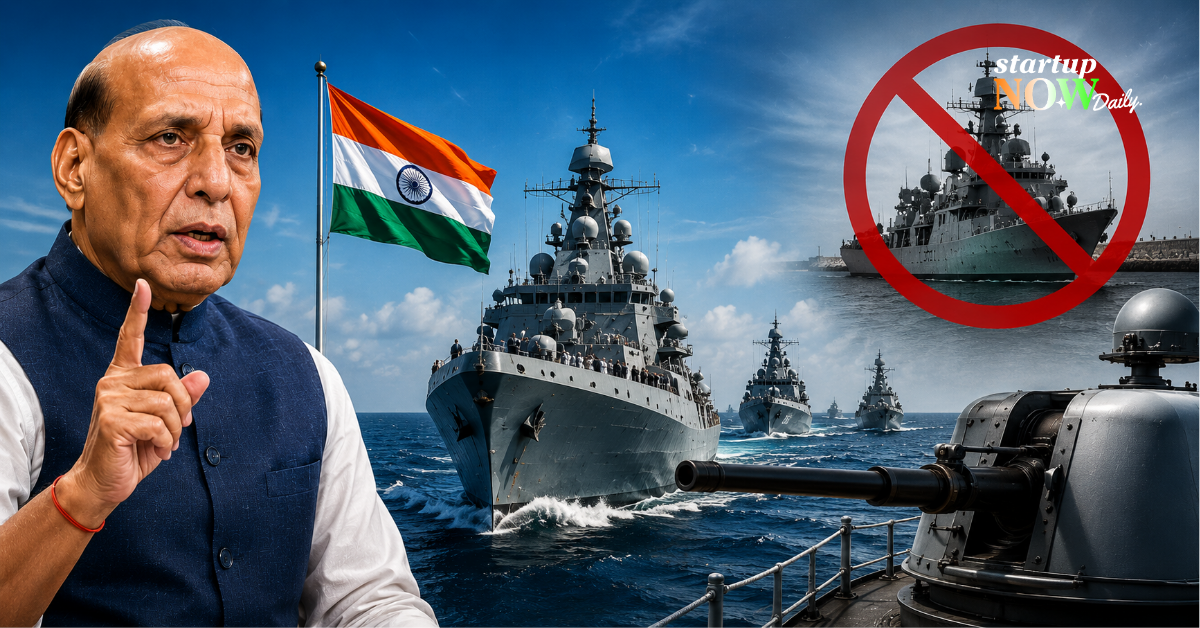
Defence Minister Rajnath Singh said on Saturday that the Indian Navy played a crucial role during Operation Sindoor by maintaining sustained pressure on Pakistan, effectively forcing the entire Pakistan Navy to remain confined to its ports.
Speaking at the inauguration of the Nausena Shaurya Vatika naval museum in Lucknow, Singh said the Indian Navy was deployed in the Arabian Sea with full operational readiness and maintained constant strategic pressure throughout the military operation.
“As a result, Pakistan’s entire Navy remained confined to its ports,” he said.
What Was Operation Sindoor?
Operation Sindoor was launched on May 7, 2025, following the Pahalgam terror attack.
The operation involved precision strikes by Indian armed forces on terror infrastructure located in Pakistan and Pakistan-occupied Kashmir (PoK). The military confrontation continued until May 10, when both sides reached an understanding that led to the cessation of hostilities.
While much of the public focus remained on air and land operations, Singh highlighted that naval deployment played a significant role in shaping the strategic environment during the conflict.
How Did The Indian Navy Contribute?
According to the Defence Minister, the Navy’s deployment in the Arabian Sea created a strong deterrence effect that restricted Pakistan’s maritime manoeuvrability.
Military experts note that forward deployment of naval assets can exert considerable pressure by limiting an adversary’s operational flexibility and increasing uncertainty about potential maritime responses.
Although Singh did not disclose specific operational details, his remarks indicate that India’s naval presence served as a critical component of the country’s broader military strategy during Operation Sindoor.
Why Was The Naval Museum Opened In Lucknow?
The Defence Minister was speaking during the inauguration of the Nausena Shaurya Vatika, an open-air naval museum jointly developed by the Indian Navy and the Uttar Pradesh Tourism Department.
The museum showcases the history, operational capabilities and achievements of the Indian Navy.
Singh said the facility would not only become a source of inspiration for future generations but also emerge as a major tourist attraction in Lucknow.
The inauguration was attended by Yogi Adityanath and Admiral Dinesh K Tripathi, among other dignitaries.
Why Build A Naval Museum In A Landlocked City?
Addressing questions about the museum’s location, Singh said maritime security impacts every Indian citizen regardless of where they live.
He emphasised that India’s economy, trade routes and energy security are deeply linked to the Indian Ocean, making naval strength a national concern rather than a coastal issue.
“The Navy is an asset of the entire nation, and its strength comes from the confidence and resolve of every citizen,” Singh said.
What Are The Main Attractions At Nausena Shaurya Vatika?
One of the key highlights of the museum is the decommissioned warship INS Gomati, which was retired from service in May 2022.
Singh noted that the vessel shares a symbolic connection with Lucknow through the Gomti River and even carried imagery associated with the city’s historic Chhatar Manzil.
Other exhibits include:
- INS Gomati’s anchor
- Main mast and propeller
- CET-53M submarine obstacle equipment
- Naval operational displays
- Maritime security and technology exhibits
The Defence Minister also announced plans to bring a submarine to the museum in the future to further enhance the visitor experience.
How Has India’s Defence Capability Changed?
During his address, Singh highlighted India’s growing defence manufacturing ecosystem.
According to him, India’s defence exports have increased dramatically from less than Rs 1,000 crore before 2014 to nearly Rs 40,000 crore today.
He said the growth reflects India’s increasing self-reliance in defence production and expanding role in the global defence market.