
Can JSW Become India’s Next Major Electric Vehicle Challenger?
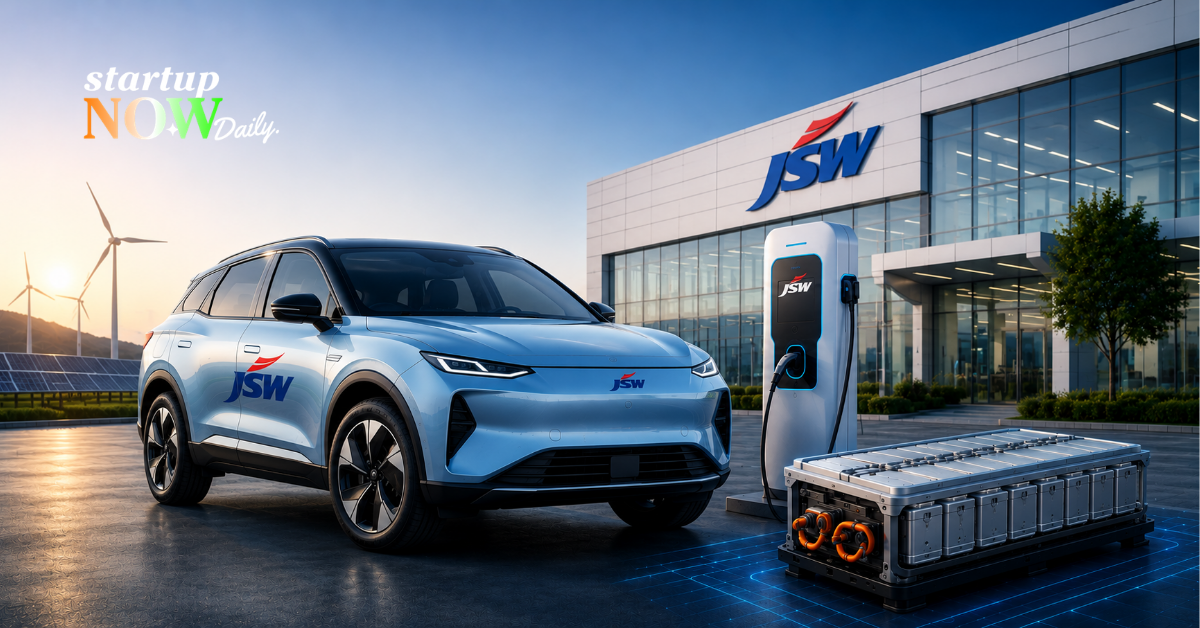
India’s electric passenger vehicle market is preparing for a major shake-up as the JSW Group accelerates plans to enter the new energy vehicle (NEV) segment with an ambitious ₹18,000 crore investment.
The steel-to-paints conglomerate is building a large-scale automotive manufacturing facility in Sambhaji Nagar (formerly Aurangabad), Maharashtra, positioning itself to challenge established electric vehicle leaders Tata Motors and Mahindra & Mahindra.
The move marks one of the most significant industrial diversification efforts undertaken by the JSW Group and reflects growing confidence in India’s rapidly evolving clean mobility ecosystem.
Industry observers believe the success of the venture will depend heavily on JSW’s ability to secure advanced vehicle technologies, battery partnerships, and a competitive product portfolio capable of taking on market leaders.
Why Is JSW Betting Big On New Energy Vehicles?
The company’s investment comes at a time when India’s electric mobility transition is gaining momentum across passenger vehicles, commercial vehicles, and public transportation.
JSW is developing a dedicated manufacturing facility spread across 600 acres in Maharashtra with an initial annual production capacity of 500,000 vehicles.
The plant has been designed with future scalability in mind and can eventually expand capacity to one million vehicles annually, making it one of the largest automotive manufacturing projects currently under development in India.
The company is focusing on new energy vehicles, a category that includes fully electric vehicles as well as automobiles powered partly by electricity through hybrid technologies.
With rising consumer acceptance, supportive government policies, and growing charging infrastructure, the segment is expected to witness substantial long-term growth.
What Is The Company’s Launch Timeline?
JSW Motors Ltd, the group’s dedicated passenger vehicle business, has already established a detailed rollout roadmap.
According to company plans, the assembly facility is expected to be operational by June or July this year.
Vehicle assembly operations are scheduled to begin in November, when the company is also expected to open bookings for its first product.
Customer deliveries are targeted for late December or early January, signaling an aggressive go-to-market strategy designed to establish an early presence in the competitive EV market.
The accelerated timeline underscores JSW’s determination to emerge as a serious contender rather than a niche participant in the sector.
Why Are Technology And Battery Partnerships Critical?
While manufacturing capacity provides scale, technology and battery ecosystems will likely determine the success of JSW’s automotive ambitions.
The electric vehicle market is increasingly defined by battery performance, software integration, vehicle efficiency, and charging capabilities.
To compete effectively against established players such as Tata Motors, Mahindra & Mahindra, and global manufacturers entering India, JSW will need access to advanced battery technologies and strong supply-chain partnerships.
Industry experts believe strategic alliances with technology providers and battery manufacturers could play a pivotal role in reducing development timelines and improving product competitiveness.
As battery costs continue to account for a significant portion of EV pricing, securing reliable and cost-efficient battery sourcing arrangements will be crucial for achieving scale.
How Competitive Is The Market?
Tata Motors and Mahindra currently dominate India’s electric passenger vehicle segment, collectively controlling more than 60% of the market.
However, competition is intensifying as both domestic and international manufacturers accelerate investments in electric mobility.
Interestingly, JSW’s upcoming facility will be located near a new manufacturing plant being developed by Toyota Kirloskar, which is also expanding its presence in electrified mobility.
The emergence of multiple large-scale investments highlights growing confidence in India’s future as a major automotive and EV manufacturing hub.
What Could This Mean For India’s EV Industry?
JSW’s entry could increase competition, accelerate innovation, and provide consumers with more vehicle choices across different price points.
The project also has the potential to strengthen domestic manufacturing capabilities, generate employment opportunities, and support India’s broader goals of reducing fossil fuel dependence.
If executed successfully, the ₹18,000 crore venture could transform JSW from a diversified industrial conglomerate into a significant player in India’s next-generation mobility landscape.