
Why Is TCS Making A Massive Bet On AI Agents?
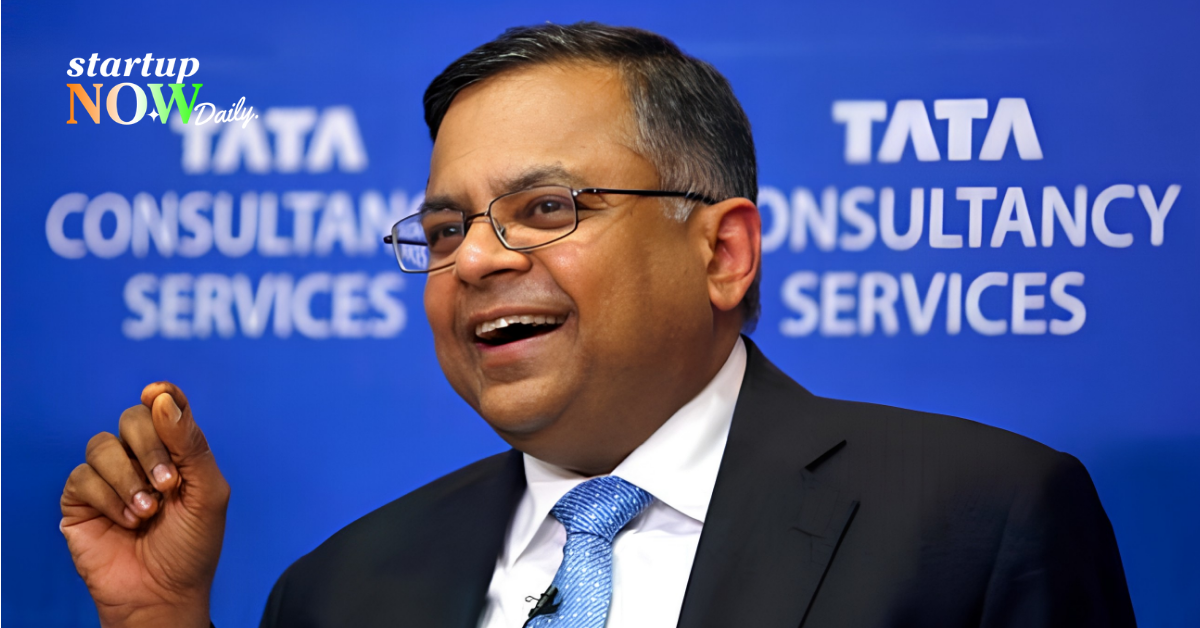
Tata Consultancy Services (TCS) Chairman N Chandrasekaran has outlined an ambitious vision for the company’s AI-driven future, stating that the IT giant could have as many artificial intelligence agents as human employees within the next three years.
Speaking at TCS’ 31st Annual General Meeting (AGM), Chandrasekaran described the ongoing AI transformation as the most significant opportunity the company has encountered in its history. The statement underscores how rapidly artificial intelligence is reshaping the global technology services industry.
With a workforce exceeding 600,000 employees globally, the projection highlights the scale at which TCS plans to deploy AI-powered digital agents across business functions, software development, customer operations, and enterprise services.
The announcement comes at a time when technology companies worldwide are racing to integrate AI into their core operations while addressing concerns around automation and the future of work.
How Large Is TCS’ AI Business Becoming?
Chandrasekaran revealed that TCS achieved annualised AI revenue of approximately $2.4 billion during the final quarter of FY26.
According to him, the company’s AI business is expanding rapidly and is currently growing at a compound quarterly growth rate (CQGR) of 22.4%.
The growth reflects rising enterprise demand for AI-powered transformation projects, automation solutions, and next-generation digital infrastructure.
Global enterprises are increasingly allocating larger technology budgets toward AI initiatives as they seek productivity gains, operational efficiency, and competitive advantages.
TCS believes this trend is creating a significantly larger addressable market for technology service providers.
Is AI A Threat To The IT Services Industry?
Addressing one of the biggest concerns facing the sector, Chandrasekaran acknowledged investor worries about the impact of artificial intelligence on traditional IT services.
He pointed to a growing question emerging across the industry: if AI can perform many software and technology related tasks, what happens to companies built around providing those services?
However, Chandrasekaran argued that the concern stems from a misunderstanding of AI’s broader role.
According to him, artificial intelligence is not merely a tool that reduces human effort. Instead, it represents a new layer of digital infrastructure that will create entirely new categories of work and business opportunities.
While AI may automate portions of software development and maintenance, it is simultaneously expanding the scope of technology adoption across industries.
Why Does TCS Believe The Market Is Expanding?
TCS expects AI to significantly widen its potential customer base.
Chandrasekaran noted that many organizations that previously did not require large-scale IT services are now turning to technology providers for assistance with AI implementation, governance, and transformation projects.
As enterprises seek to integrate intelligence into every aspect of their operations, demand for consulting, deployment, integration, security, and AI oversight is expected to increase substantially.
He emphasized that despite concerns surrounding AI disruption, TCS continues to maintain strong business fundamentals.
The company reported healthy revenue growth, stable margins, and one of the strongest deal pipelines in its history, reinforcing confidence in its long-term outlook.
What Are The Five Major AI Opportunities Identified By TCS?
According to Chandrasekaran, TCS sees five major opportunity areas emerging from the AI revolution.
The first involves modernizing the core technology infrastructure on which large enterprises operate.
The second focuses on reimagining entire business processes and operating models through AI-driven transformation.
The third centers on governance, oversight, and management of artificial intelligence systems within organizations.
The fourth opportunity lies in sovereign AI initiatives, where countries develop and manage their own AI ecosystems and infrastructure.
The fifth area is physical AI, which includes intelligent machines, robotics, and AI-powered industrial systems.
Chandrasekaran stated that TCS is already actively building solutions across all five domains.
What Gives TCS Confidence In The AI Era?
For TCS, the future competitive advantage will extend beyond AI models themselves.
Chandrasekaran believes trust, enterprise relationships, and contextual understanding of customer businesses will become the most valuable assets in the AI economy.
He emphasized that while AI models may become increasingly accessible, organizations will continue to rely on trusted technology partners to implement, manage, and scale these capabilities effectively.
As enterprises accelerate AI adoption globally, TCS is positioning itself not only as a technology services provider but as a strategic partner in building the next generation of intelligent digital infrastructure.