
Activist Ends Fast Following Government Commitments as Nationwide Protests Continue Over NEET Controversy
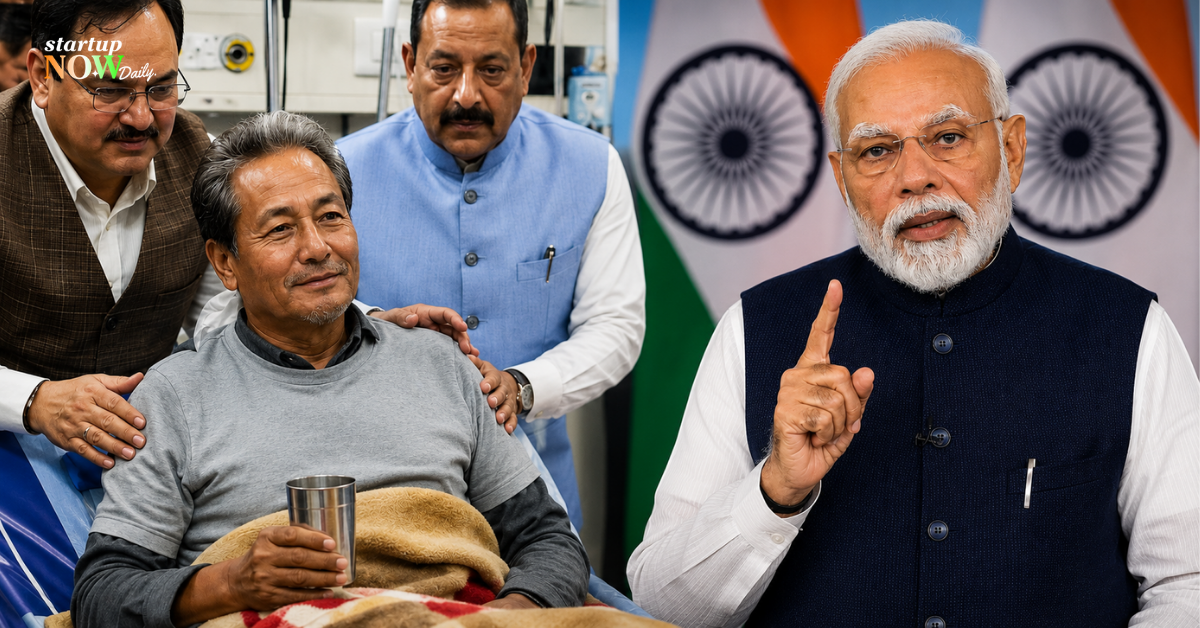
Climate activist and educator Sonam Wangchuk ended his 26-day hunger strike late Thursday night at Medanta Hospital, Gurugram, after receiving written assurances from the Central Government on key demands related to the alleged NEET paper leak controversy and student protests.
The fast ended in the presence of Union Ministers J.P. Nadda and Jitendra Singh, who met Wangchuk along with representatives of the Ladakh Apex Body and conveyed the government’s commitments.
While Wangchuk has ended his protest, the Cockroach Janta Party (CJP) has announced that its nationwide agitation will continue until Union Education Minister Dharmendra Pradhan resigns.
Why Did Wangchuk End His Fast?
Wangchuk had been on an indefinite hunger strike in support of students protesting against alleged irregularities in the NEET examination and demanding accountability in India’s examination system.
In a video message released after ending his fast, Wangchuk said the Centre had provided written assurances on several of his key demands.
According to him, the government assured that:
- The issue of accountability in the examination system would be discussed in Parliament.
- Peaceful protesters participating at Jantar Mantar and the July 20 march to Parliament would not face criminal cases.
- Student concerns would receive serious consideration from the government.
Wangchuk said these assurances convinced him to conclude his fast while expressing hope that the commitments would now be implemented.
PM Modi Announces Tougher Law Against Paper Leaks
Hours after Wangchuk ended his fast, Prime Minister Narendra Modi released a video message outlining the government’s proposed legal response to examination paper leaks.
The Prime Minister said a draft proposal introducing fast-track courts and stricter penalties for those involved in examination paper leaks had already been prepared.
According to Modi, the draft legislation will be discussed during the Union Cabinet meeting and subsequently introduced in Parliament as early as the second week of the ongoing session.
He said the government considers examination paper leaks a serious issue affecting millions of students and their families.
Modi also highlighted that authorities had already ensured fresh examinations for nearly 22 lakh students, with results declared earlier this month, while those allegedly responsible for the leaks had been arrested.
CJP Continues Protest
Despite Wangchuk ending his hunger strike, the Cockroach Janta Party (CJP) announced that its movement would continue.
CJP founder Abhijit Dipke thanked Wangchuk for his sacrifice but reiterated that the organisation’s protest would not conclude until Education Minister Dharmendra Pradhan steps down.
Dipke said the movement intends to continue peacefully while seeking accountability for examination irregularities and alleged police action against student protesters.
The organisation also announced that talks with the Centre are scheduled to take place at the Constitution Club of India, where a CJP delegation will hold discussions with government representatives.
Protests Continue Across India
Student demonstrations continued in several parts of the country even after Wangchuk concluded his fast.
In Delhi, police reportedly detained more than 25 students who were travelling toward Jantar Mantar carrying protest material.
Demonstrations were also reported from several states, including Rajasthan and Bihar, reflecting the widening reach of the movement.
The CJP has further called for nationwide peaceful protests, urging supporters to organise demonstrations in districts across India to demand examination reforms and action against those responsible for alleged paper leaks.
Political Debate Intensifies
The controversy continues to dominate the ongoing Monsoon Session of Parliament.
The government has repeatedly stated that it is prepared to discuss examination reforms and the alleged NEET irregularities in Parliament.
However, Opposition parties have maintained that any meaningful discussion must begin with the resignation of Education Minister Dharmendra Pradhan, whom they hold politically accountable for the controversy.
The issue has evolved into one of the most significant political flashpoints of the session, combining student concerns, examination reforms, public accountability, and broader questions surrounding the country’s education system.
Outlook
While Sonam Wangchuk’s decision to end his hunger strike marks an important development, the broader movement surrounding the alleged NEET paper leak remains active.
The government’s proposed legislation on paper leaks, along with upcoming discussions in Parliament and negotiations with student representatives, will likely shape the next phase of the controversy.
With protests continuing across the country and political pressure mounting, attention will now shift to whether the Centre’s assurances translate into legislative action and institutional reforms.