
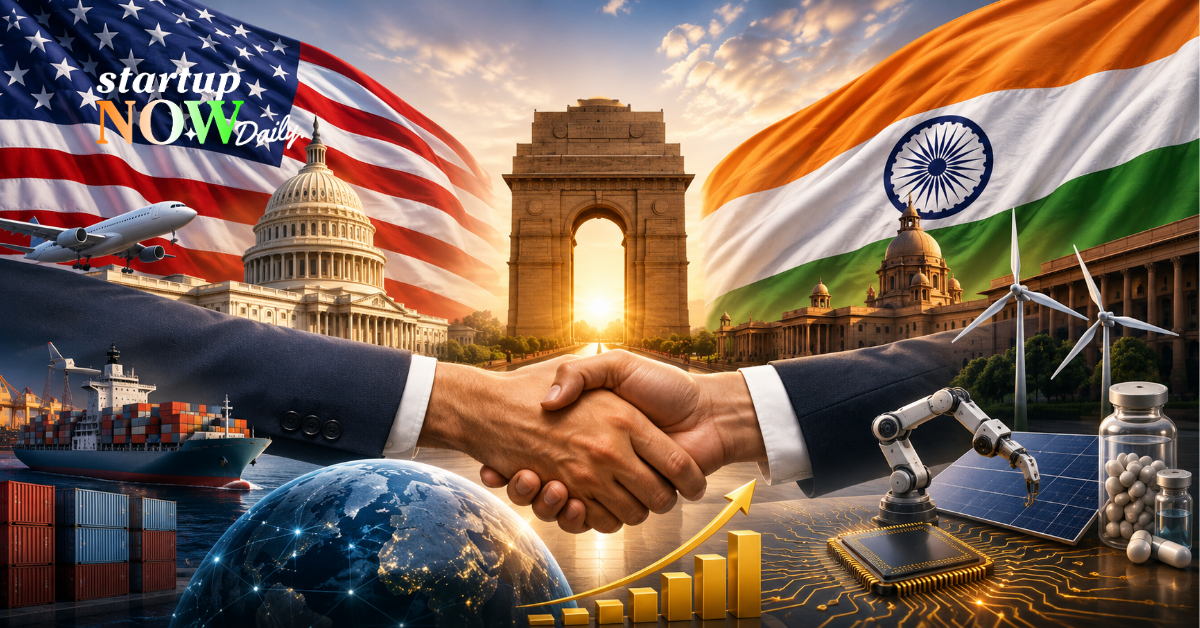
Why Are The US And India Entering The Final Stage Of Trade Deal Negotiations?
The long-awaited US-India bilateral trade agreement appears to be on the verge of completion, with both countries now focusing on resolving the final set of outstanding issues. According to US Ambassador to India Sergio Gor, 99 per cent of the agreement has already been finalized, leaving only a small portion of technical and legal matters to be settled.
Speaking at the Citi Annual India Conference in Mumbai, Gor revealed that trade officials from both countries are actively engaged in negotiations in New Delhi this week. The discussions come after Indian trade representatives held meetings in Washington DC last week, highlighting the intensive efforts underway to conclude one of the most significant trade agreements between the two nations.
The latest round of talks is expected to include a key meeting between the US delegation and Commerce and Industry Minister Piyush Goyal, which could help push the agreement across the finish line.
What Is Holding Up The Final 1% Of The US-India Trade Deal?
While most aspects of the agreement have reportedly been finalized, a handful of issues remain unresolved.
According to Gor, the remaining differences are largely technical rather than substantive. These include legal language, implementation timelines, and procedural matters related to when specific provisions of the agreement will come into effect.
The ambassador stressed that neither side is facing major disagreements over policy or market access, suggesting that the final stretch of negotiations is focused on ensuring clarity and operational feasibility before the deal is formally signed.
Officials from both countries remain optimistic that these final hurdles can be overcome in the near future.
Why Has The US-India Trade Agreement Taken So Long To Negotiate?
Trade agreements between major economies often involve complex negotiations across multiple sectors, and the US-India pact has been no exception.
Responding to criticism about the lengthy timeline, Gor pointed out that India’s recently concluded trade agreement with the European Union took nearly 19 years to negotiate.
He also praised India’s negotiating team, noting that Indian officials have historically maintained firm positions on key issues and successfully protected domestic interests during discussions with major trading partners.
According to Gor, India’s ability to hold its ground on sensitive matters is one of the reasons why securing a comprehensive agreement requires patience and extensive negotiations.
What Did Sergio Gor Say About India’s Negotiating Team?
The ambassador described Indian negotiators as highly skilled and effective.
He suggested that India’s negotiating strength has made the discussions challenging but ultimately more meaningful. According to Gor, India has consistently defended its priorities across several sectors, making it difficult for trading partners to secure concessions without offering significant benefits in return.
His remarks were viewed as a recognition of India’s growing influence in global trade negotiations and its ability to negotiate from a position of strength.
How Much Has Trade Between India And The United States Increased?
The economic relationship between the two countries has expanded dramatically over the past two decades.
According to Gor, bilateral merchandise and services trade has grown from approximately $20 billion to $220 billion, representing an eleven-fold increase.
The growth reflects deeper integration between the two economies, rising investment flows, and stronger cooperation across technology, manufacturing, pharmaceuticals, and services sectors.
The ambassador described the US-India relationship as the most consequential global partnership of the century and argued that economic cooperation will continue to be a key pillar of the broader strategic relationship.
Why Is The US-India Economic Partnership Becoming More Important?
Beyond trade volumes, the relationship is increasingly being shaped by innovation, technology, supply chains, and strategic cooperation.
Both countries are working together in areas such as artificial intelligence, semiconductors, critical minerals, pharmaceuticals, clean energy, and advanced manufacturing.
As global companies seek alternatives to concentrated supply chains, India has emerged as a key partner for American businesses looking to diversify operations and strengthen resilience.
The growing economic partnership is also aligned with broader geopolitical objectives, including reducing dependence on vulnerable supply chains and supporting trusted technology ecosystems.
What Major American Investments Are Being Planned In India?
Gor highlighted several large investment commitments from leading American technology companies that demonstrate confidence in India’s long-term growth story.
According to the ambassador, Amazon is expected to invest $35 billion in India by 2030 as it expands its ecommerce and cloud operations.
Microsoft has announced investments worth $17.5 billion, including hyperscale cloud infrastructure and digital transformation initiatives.
Meanwhile, Google has unveiled plans to establish a $15 billion artificial intelligence hub in India, underscoring the country’s growing importance in the global AI ecosystem.
These investments are expected to generate employment, strengthen digital infrastructure, and accelerate innovation across multiple sectors.
How Could These Investments Impact India’s Economy?
Large-scale investments from global technology companies are likely to boost India’s digital economy and support the government’s ambitions to become a global technology hub.
The investments could create thousands of jobs, attract additional foreign capital, improve technology infrastructure, and enhance India’s position in emerging sectors such as cloud computing and artificial intelligence.
Industry experts believe such commitments also signal growing international confidence in India’s economic prospects and regulatory environment.
What Is The US-India Critical Minerals Framework?
Another major development highlighted by Gor was the signing of the US-India Critical Minerals Framework.
The agreement was formalized last week in the presence of US Secretary of State Marco Rubio and External Affairs Minister S Jaishankar.
The framework is designed to strengthen cooperation in securing access to critical minerals that are essential for clean energy technologies, semiconductors, defense systems, and advanced manufacturing.
The agreement aims to create trusted supply chains while reducing dependence on geopolitically sensitive sources.
Why Are Critical Minerals Becoming A Strategic Priority?
Critical minerals such as lithium, cobalt, nickel, and rare earth elements play a crucial role in modern industries.
They are essential for electric vehicles, renewable energy systems, batteries, electronics, and defense technologies.
As global demand for these resources continues to rise, countries are increasingly seeking secure and diversified supply chains.
The US-India partnership is expected to improve access to these resources while strengthening long-term economic and strategic cooperation.
What Is The TRUST Initiative Launched By Trump And Modi?
The TRUST initiative, short for Transforming Relationship Utilising Strategic Technologies, was launched in February 2025 to deepen collaboration between the two countries in advanced technology sectors.
Under the initiative, both nations have committed to expanding cooperation in artificial intelligence, pharmaceutical supply chains, critical minerals, and other strategic industries.
The programme reflects a broader effort to align economic and technological priorities while strengthening resilience against global disruptions.
Officials believe the initiative could become a cornerstone of future US-India cooperation.
Why Does The US Continue To View India As A Trusted Partner?
Gor emphasized that American businesses increasingly view India as a trusted destination for research, manufacturing, and innovation.
He noted that many companies have experienced intellectual property challenges in other markets and are looking for partners that offer stability and reliability.
The ambassador also pointed out that nearly 40 per cent of generic pharmaceuticals imported by the United States come from India, highlighting the country’s critical role in supporting American healthcare needs.
According to Gor, this level of trust forms the foundation for deeper cooperation across technology, healthcare, and strategic industries.
When Could The US-India Trade Deal Be Finalised?
With 99 per cent of the agreement reportedly complete, attention is now focused on resolving the remaining technical details.
Trade officials from both countries are expected to continue discussions throughout the week, with key meetings taking place in New Delhi.
If the final issues are resolved as anticipated, the agreement could soon become one of the most significant milestones in US-India economic relations, paving the way for stronger trade flows, increased investment, and deeper strategic cooperation between the world’s two largest democracies.