
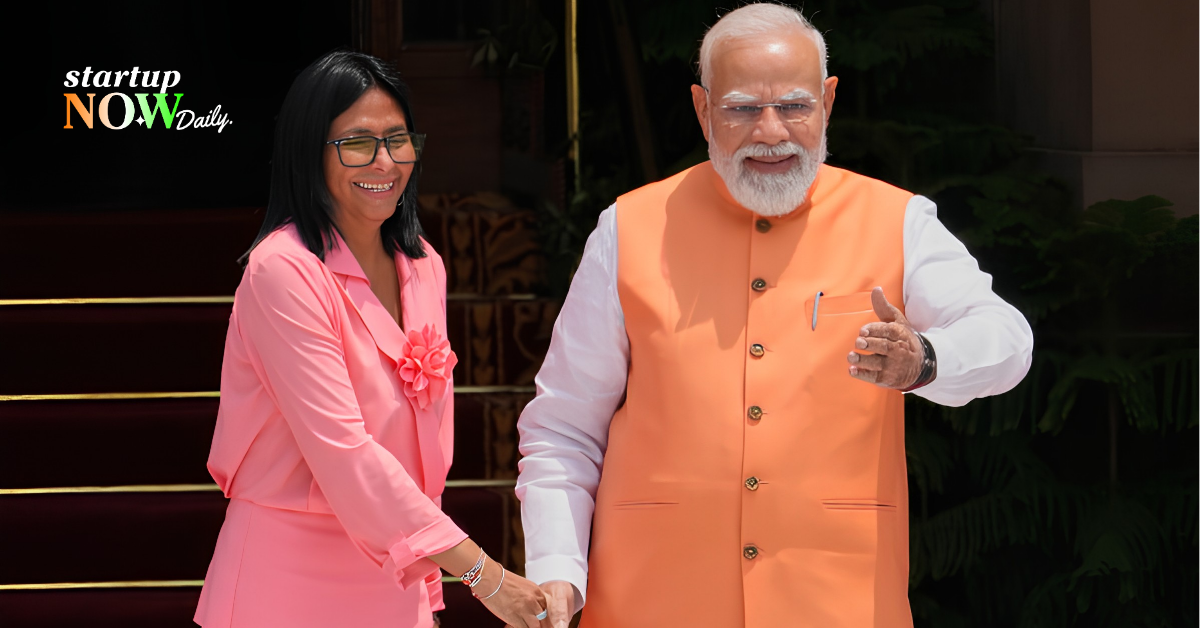
What Was Discussed During PM Modi’s Meeting With Delcy Rodriguez?
Prime Minister Narendra Modi on Thursday held bilateral talks with Venezuela’s Acting President Delcy Rodriguez in New Delhi, with discussions focusing on energy cooperation, trade, investment, healthcare, transportation, and other areas of mutual interest. The meeting comes as India seeks to diversify crude oil imports amid disruptions in global energy supplies.
Rodriguez is on a five-day visit to India and is accompanied by senior ministers overseeing foreign affairs, finance, science and technology, transportation, and communication. The visit is being viewed as an important step toward strengthening economic and strategic ties between the two countries.
Why Is Energy Cooperation At The Centre Of Discussions?
Energy emerged as the key focus of the talks as India continues to increase crude oil purchases from Venezuela.
India was once among the largest buyers of Venezuelan crude, importing more than 400,000 barrels per day before sanctions and compliance related restrictions halted purchases in 2020. Following policy changes and easing of restrictions earlier this year, Indian refiners resumed imports and have significantly increased sourcing from Venezuela.
According to recent reports, India became the second-largest importer of Venezuelan oil in May 2026, purchasing approximately 427,000 barrels per day.
Why Is Venezuela Important For India’s Energy Security?
The ongoing West Asia crisis has disrupted traditional crude supply routes and increased concerns around energy security.
As one of the world’s largest oil importers, India has been actively diversifying its sourcing strategy to reduce dependence on any single region. Venezuela’s vast crude reserves offer an alternative source of supply at a time when global energy markets remain volatile.
How Could Trade And Investment Relations Expand?
Beyond energy, both sides are exploring opportunities to increase trade and investment across multiple sectors.
Officials indicated that discussions covered pharmaceuticals, healthcare, transportation, renewable energy, digital technology, and other strategic industries. The two countries are looking to broaden economic engagement and create new avenues for commercial cooperation.
What Role Can Indian Companies Play?
Indian companies have traditionally maintained a presence in Venezuela’s energy sector and could benefit from renewed economic engagement.
As Venezuela seeks foreign investment to revive its economy and energy infrastructure, Indian firms may find opportunities in oil, gas, pharmaceuticals, engineering services, and technology related sectors.
How Have India-Venezuela Relations Evolved Recently?
The latest meeting builds on growing engagement between the two countries in recent months.
Earlier this year, Prime Minister Modi and Rodriguez held discussions aimed at deepening cooperation across trade, investment, energy, agriculture, health, and digital technology. Both sides agreed to strengthen bilateral ties and maintain close cooperation on issues concerning the Global South.
The current visit is expected to further accelerate that momentum as both nations seek stronger economic and strategic partnerships.
What Does This Mean For India?
For India, stronger ties with Venezuela could provide greater energy security, improved access to crude oil supplies, and new investment opportunities for Indian businesses.
The engagement also aligns with New Delhi’s broader strategy of diversifying global partnerships and strengthening relations with resource-rich nations.
Could Energy Become The Cornerstone Of The Relationship?
While cooperation is expanding across several sectors, energy remains the most significant pillar of the India-Venezuela relationship.
As crude imports rise and both countries explore deeper collaboration across the energy value chain, the partnership could enter a new phase driven by long-term energy security and economic cooperation.