
Agriculture Needs Structural Reforms To Improve Farmer Incomes
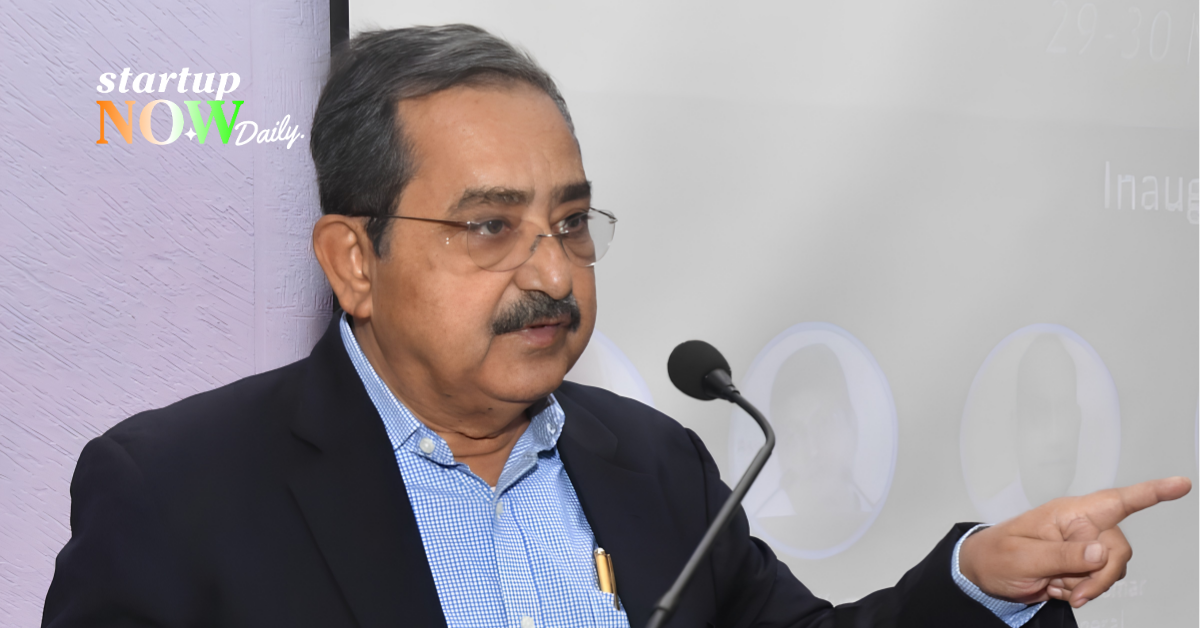
India must move surplus labour out of agriculture and replace commodity based subsidies with direct income transfers to address long standing structural challenges in the farm sector, NITI Aayog Vice-Chairman Ashok Lahiri said on Tuesday.
Speaking at the launch of the book Getting Agriculture Markets Right, authored by agricultural economist Ashok Gulati, researcher Raya Das, and NSE Chief Economist Tirthankar Patnaik, Lahiri stressed that agriculture’s disproportionate dependence for livelihoods remains a key concern.
While agriculture contributes roughly one-sixth of India’s gross domestic product (GDP), nearly half of the country’s population depends on the sector for employment and income.
“If half the people are dependent on one-sixth of GDP, distress is inevitable,” Lahiri said, arguing that the long-term solution lies in shifting excess labour towards industry and services while simultaneously improving agricultural productivity.
Direct Cash Transfers Better Than Subsidies
Lahiri advocated replacing commodity-based subsidies with direct income transfers, describing cash transfers as a more efficient and economically sustainable mechanism for supporting farmers.
He acknowledged, however, that such reforms would face political resistance because beneficiaries often perceive physical subsidies as more reliable and secure than direct cash support.
The comments come amid ongoing debates around India’s subsidy framework, which includes support for fertilisers, electricity, irrigation, and food procurement.
According to Lahiri, reforms are necessary to improve efficiency while ensuring benefits reach farmers more directly.
Concerns Over MSP Distorting Cropping Patterns
The NITI Aayog Vice-Chairman also highlighted concerns regarding the impact of the Minimum Support Price (MSP) system on agricultural production decisions.
Citing findings from the book, Lahiri noted that fewer than 10 per cent of Indian farmers directly benefit from MSP procurement, while less than 10 per cent of the gross value of agricultural output is covered under procurement operations.
Despite this limited reach, MSP continues to significantly influence crop selection across the country.
He pointed out that wheat and rice account for nearly 78 per cent of total procurement value, while expanded procurement in states such as Telangana, Chhattisgarh, and Odisha has encouraged cultivation of water-intensive crops and discouraged diversification towards pulses and oilseeds.
Lahiri argued that MSP was designed during a period when India faced food shortages and depended heavily on imports. With the country now producing food surpluses, he said the fiscal and environmental costs of maintaining the existing system are becoming increasingly difficult to justify.
Efficient Markets Key To Agricultural Growth
While supporting market reforms, Lahiri cautioned against assuming that markets alone can solve agricultural challenges.
Drawing from his experience as a public representative from Balurghat in West Bengal, he observed that functional agricultural markets remain absent in many rural areas, particularly for small farmers, self-help groups, and farmer producer organisations (FPOs).
He emphasised that marketing remains one of the biggest hurdles for producer groups despite improvements in production capabilities.
According to Lahiri, India needs stronger agricultural market infrastructure and efficient aggregators capable of connecting farmers directly with consumers, improving price realisation while reducing supply-chain inefficiencies.
Focus Should Shift Beyond Production
At the event, Prime Minister’s Economic Advisory Council Chairman S Mahendra Dev argued that future agricultural policy should move beyond production focused interventions and place greater emphasis on post-harvest management, marketing, and agro-processing.
Dev said improving the livelihoods of people dependent on agriculture remains critical, even as industrialisation gradually absorbs labour from the sector.
He identified three key priorities for agricultural policy: strengthening post-harvest infrastructure and marketing systems, expanding food processing industries, and supporting small and marginal farmers through FPOs and cooperative models.
Dev also highlighted the strong growth recorded by sectors such as horticulture, livestock, and fisheries, which largely operate outside the MSP framework and have been expanding at more than 7 per cent annually.
Technology Can Improve Market Access
The discussion also highlighted the growing role of technology in agricultural transformation.
Dev pointed to platforms such as e-NAM, ONDC, and emerging artificial intelligence solutions as tools that could improve price discovery, supply forecasting, and market access for farmers.
However, he cautioned that infrastructure gaps and technology adoption challenges still need to be addressed before these solutions can achieve their full potential.
Former NITI Aayog member Ramesh Chand added that agricultural policymaking in India has gradually shifted from evidence based decision making towards political and populist considerations.
He argued that stronger farmer participation in policy formulation is necessary to ensure reforms are effective and sustainable.