
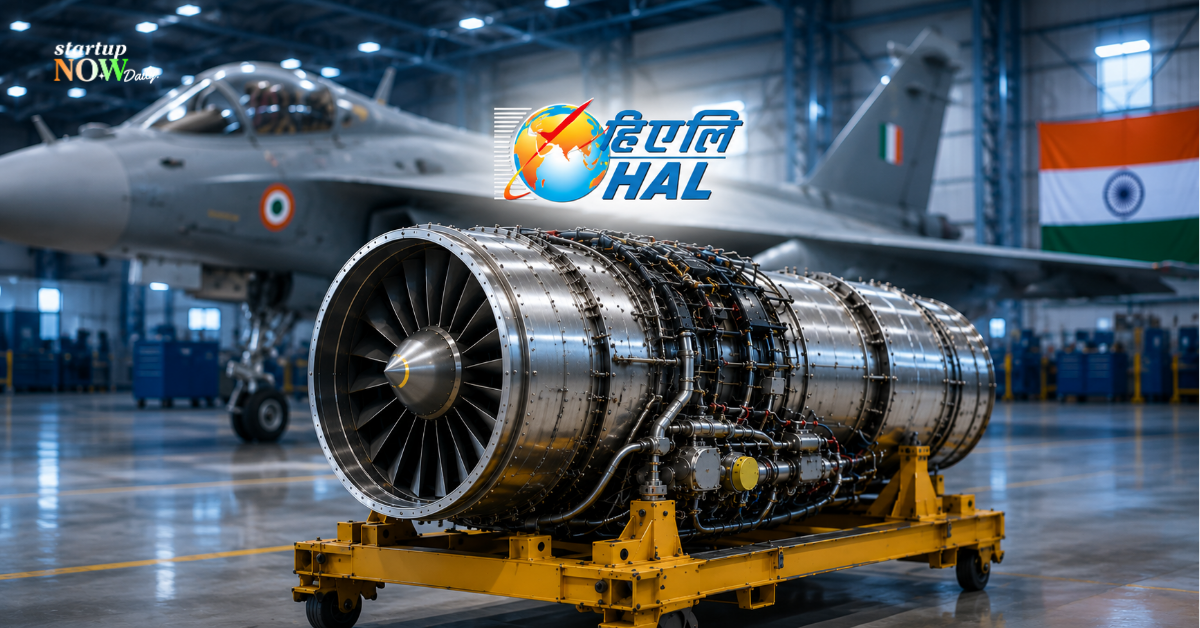
Indigenous Overhaul Capability Strengthens Defence Readiness Amid Ongoing GE Engine Talks
At a time when India is reportedly facing challenges in negotiations with US aerospace major General Electric (GE) over the supply and technology transfer of F414-INS6 engines for the country’s upcoming Advanced Medium Combat Aircraft (AMCA) programme, Hindustan Aeronautics Limited (HAL) has achieved a significant milestone in indigenous defence capability.
HAL’s Engine Division in Koraput, Odisha, has successfully delivered the 1,000th repaired and overhauled (ROH) AL-31FP turbofan engine to the Indian Air Force (IAF). While the achievement may appear to be a maintenance milestone, defence experts see it as a strong reminder of India’s growing capability to sustain critical military assets domestically and the urgent need to develop indigenous fighter aircraft engines.
The milestone comes at a crucial time as India continues working toward greater self-reliance in defence manufacturing under the Atmanirbhar Bharat initiative.
What Makes HAL’s Achievement Significant?
The AL-31FP engine powers the Sukhoi Su-30MKI, which forms the backbone of the Indian Air Force’s fighter aircraft fleet.
Repairing and overhauling these advanced turbofan engines is a highly specialized engineering process that requires precision manufacturing, advanced diagnostics, component refurbishment, testing, and quality assurance.
By successfully completing the overhaul of 1,000 engines, HAL has demonstrated its ability to independently maintain one of India’s most important combat aircraft platforms without relying entirely on overseas maintenance ecosystems.
This significantly improves fleet availability, reduces turnaround time, lowers maintenance costs, and enhances operational readiness during both peacetime and conflict.
The achievement also reflects decades of technical expertise developed by HAL’s Koraput facility, which has become one of India’s most important aerospace manufacturing and maintenance centres.
Why Are Fighter Aircraft Engines So Critical?
Although India has made substantial progress in designing fighter aircraft, helicopters, missiles, and defence electronics, jet engine technology remains one of the country’s biggest technological challenges.
Modern fighter engines involve extremely complex engineering, including advanced metallurgy, high-temperature materials, precision manufacturing, digital control systems, and aerodynamic design.
Only a handful of countries possess the capability to design and manufacture high-performance military turbofan engines entirely on their own.
As a result, India continues to depend on foreign suppliers for engines powering several frontline combat aircraft.
This dependence creates vulnerabilities related to supply chains, technology access, export controls, geopolitical developments, and long-term maintenance support.
How Do GE Engine Negotiations Fit Into the Picture?
India is currently working with General Electric to acquire and manufacture F414-INS6 engines that are expected to power the future Advanced Medium Combat Aircraft (AMCA), the country’s fifth-generation stealth fighter programme.
However, reports suggest negotiations regarding technology transfer and manufacturing arrangements have encountered challenges.
While discussions continue, the situation has once again highlighted the strategic importance of developing indigenous engine technology.
Defence analysts believe that although international partnerships remain valuable, India ultimately needs complete domestic capability in fighter engine design and production to ensure long-term strategic autonomy.
HAL’s latest achievement demonstrates that India already possesses significant expertise in engine maintenance and overhaul. The next major step is mastering end-to-end engine design, development, testing, and manufacturing.
How Does This Support India’s Defence Goals?
The Government of India has been aggressively promoting domestic defence manufacturing through initiatives aimed at reducing import dependence and strengthening indigenous capabilities.
Developing advanced fighter engines aligns directly with the country’s long-term vision of building a self-reliant aerospace ecosystem.
An indigenous engine programme would not only reduce dependence on foreign suppliers but also create opportunities for research, advanced manufacturing, skilled employment, and exports.
It would further strengthen programmes such as the Light Combat Aircraft (LCA), Advanced Medium Combat Aircraft (AMCA), unmanned combat aerial vehicles, and future indigenous aerospace platforms.
The expertise gained through maintaining engines like the AL-31FP provides valuable experience that can support future domestic engine development efforts.
What Does HAL’s Milestone Mean for India’s Aerospace Future?
The successful overhaul of 1,000 AL-31FP engines represents far more than an operational achievement.
It demonstrates India’s growing capability to sustain complex defence platforms using domestic expertise while reducing dependence on foreign maintenance support.
As India expands its defence manufacturing ambitions and modernizes its armed forces, indigenous propulsion technology is likely to become one of the country’s highest strategic priorities.
The Koraput milestone highlights that India has already built strong capabilities in maintenance, repair, and overhaul (MRO). The next challenge is transforming those capabilities into complete indigenous engine design and manufacturing.
If India succeeds in developing world-class fighter jet engines, it would join a select group of nations possessing one of the most advanced and strategically important aerospace technologies.
HAL’s latest achievement serves as both a celebration of how far India has come and a reminder of the technological journey that still lies ahead.
Follow Startup Now Daily for the latest updates on defence, aerospace, technology, manufacturing, innovation, and India’s journey toward self-reliance.