
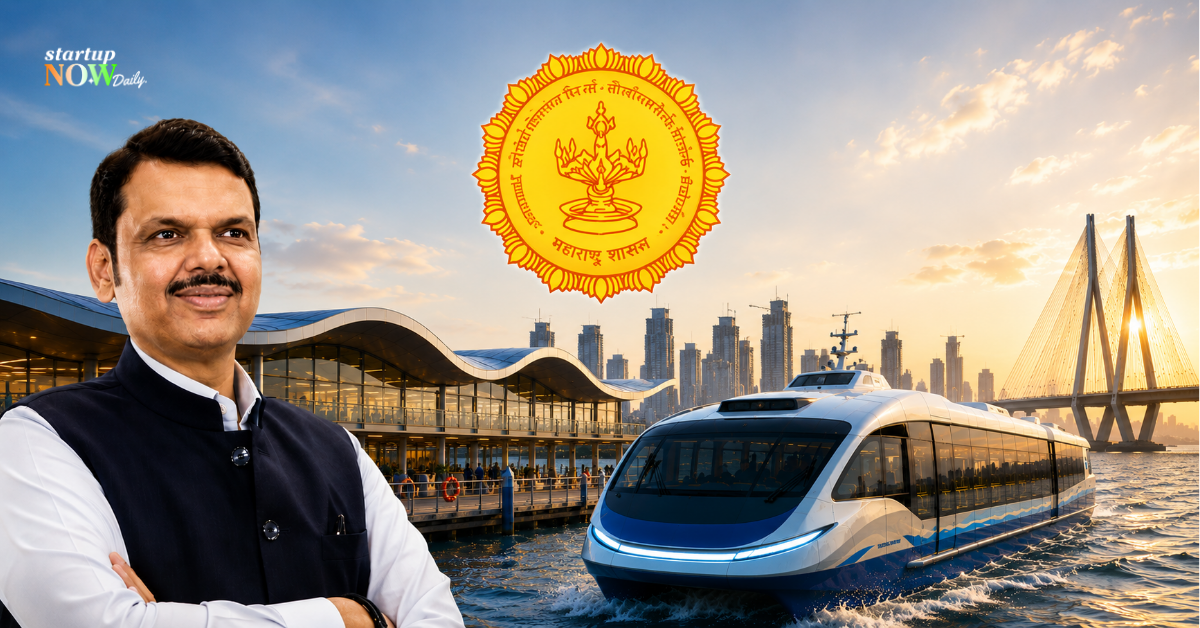
340-km network with 33 routes and 203 electric-hybrid vessels to transform Mumbai’s urban transport
The Maharashtra government has unveiled plans to develop the world’s largest Water Metro network in Mumbai with an investment of ₹6,066 crore, marking a major milestone in India’s push towards sustainable urban mobility. The ambitious project aims to integrate waterways into Mumbai’s public transport system, offering commuters a faster, cleaner, and more efficient travel alternative while reducing pressure on the city’s overcrowded roads and railways.
Spread across 340 kilometres, the proposed Water Metro will feature 33 operational routes, 44 passenger terminals, and a fleet of 203 electric-hybrid vessels. Once fully operational, the network is expected to serve nearly 75 million passengers annually by 2031, making it one of the largest water-based public transportation systems in the world.
Besides improving connectivity across Mumbai and its neighbouring regions, the project is also expected to boost Maharashtra’s maritime manufacturing ecosystem through a dedicated electric boat manufacturing facility in Sindhudurg district.
Mumbai Bets Big on Water-Based Public Transport
Chief Minister Devendra Fadnavis said Mumbai’s long-term mobility challenges cannot be addressed by expanding roads and rail infrastructure alone. The government is therefore focusing on developing waterways as a key pillar of the city’s integrated transport ecosystem.
The Water Metro is designed to provide seamless connectivity between major residential, commercial, and business hubs while reducing traffic congestion, shortening travel times, and improving last-mile connectivity.
As part of its broader urban mobility strategy, the Maharashtra government is also planning to introduce a pod taxi system in Bandra-Kurla Complex (BKC), complementing metro rail, road transport, and the upcoming water-based transit network.
Key Features of the Water Metro Project
The Mumbai Water Metro has been planned as a large-scale, environmentally sustainable public transport system.
Key highlights include:
- ₹6,066 crore total project investment
- 340-km integrated water transport network
- 33 operational water routes
- 44 modern passenger terminals
- 203 electric-hybrid passenger vessels
- 75 million annual passenger capacity by 2031
Officials believe the project will significantly reduce road traffic, improve commuting efficiency, and provide an environmentally friendly alternative for daily travel across the Mumbai Metropolitan Region.
The use of electric hybrid vessels is also expected to lower carbon emissions while supporting India’s broader clean mobility and net zero goals.
Electric Boat Manufacturing Facility to Boost Maritime Industry
To support the ambitious project, the Maharashtra Maritime Board has signed a Memorandum of Understanding (MoU) with Zoya Marine Services Private Limited.
Under the agreement, the company will manufacture and supply the electric-hybrid vessels required for the Water Metro while establishing a modern electric boat manufacturing facility at Talawane in Sawantwadi taluka of Sindhudurg district.
The proposed manufacturing unit will be developed across 22 acres with an estimated investment of ₹150 crore.
In addition to meeting the requirements of Mumbai’s Water Metro, the facility is expected to strengthen India’s domestic shipbuilding ecosystem, promote indigenous marine technology, and position Maharashtra as a major manufacturing hub for electric vessels.
Economic and Employment Impact
The Water Metro project is expected to deliver benefits beyond transportation.
According to Fisheries and Ports Minister Nitesh Rane, the initiative will strengthen Maharashtra’s maritime economy while creating new employment opportunities in manufacturing, operations, maintenance, logistics, and allied industries.
The establishment of the electric boat manufacturing facility is expected to attract further investments into marine infrastructure, encourage innovation in sustainable shipbuilding, and accelerate industrial development across coastal districts.
Officials believe the project will also improve tourism, support local businesses, and create a modern maritime ecosystem capable of serving future transportation needs.
A Major Push for Green Mobility
As Indian cities grapple with increasing traffic congestion and pollution, governments are investing in cleaner, technology-driven transportation systems.
Mumbai’s Water Metro represents one of India’s most ambitious efforts to integrate waterways into mainstream public transport.
By deploying electric-hybrid vessels, the project aims to reduce fuel consumption, lower emissions, and provide reliable mobility without adding pressure on existing road infrastructure.
The initiative also aligns with India’s broader sustainability agenda, promoting low-carbon transportation while enhancing commuter convenience.
Outlook
The ₹6,066 crore Mumbai Water Metro project has the potential to redefine urban transportation by creating the world’s largest integrated water transit network.
With extensive route coverage, modern passenger terminals, a fleet of electric-hybrid vessels, and new manufacturing infrastructure, the project is expected to improve commuter mobility, reduce congestion, generate employment, and strengthen Maharashtra’s maritime economy.
If executed as planned, the Mumbai Water Metro could become a global benchmark for sustainable urban transportation and demonstrate how waterways can effectively complement road, rail, and metro systems in one of the world’s fastest growing metropolitan regions.