
Why Is Bridge Green’s New Facility Significant For India’s Battery Ecosystem?
Bridge Green Upcycle has inaugurated Tamil Nadu’s first dedicated critical mineral recovery facility for spent lithium-ion batteries, marking a major milestone in India’s efforts to build a domestic circular economy for battery materials.
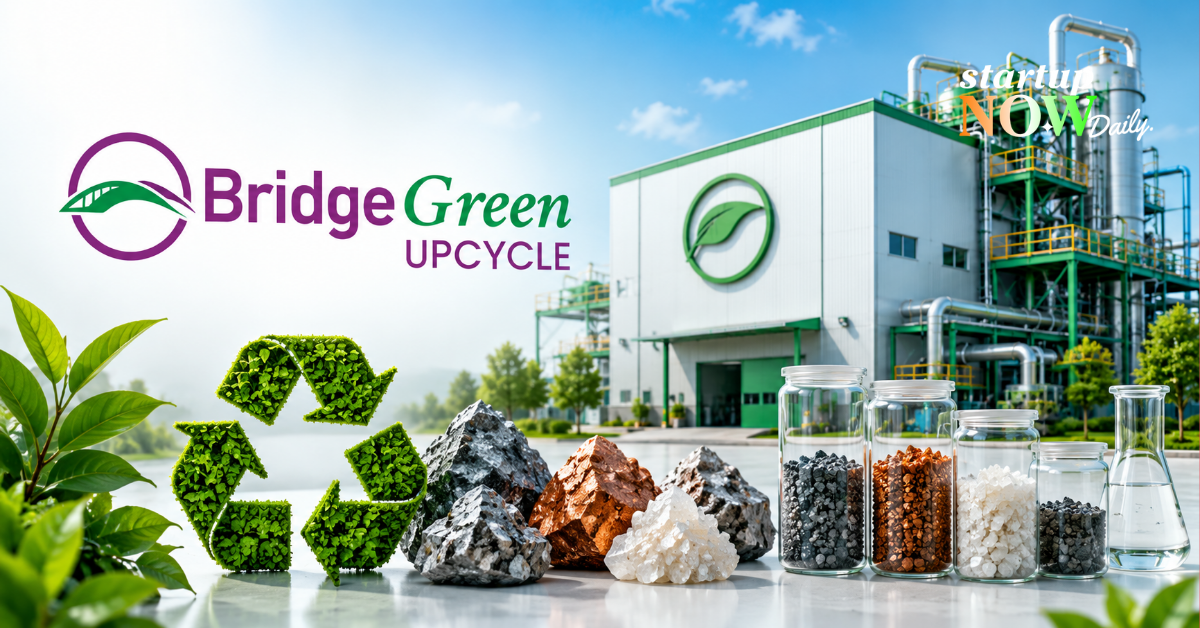
The company launched its Circularity Center in Gummidipoondi, Chennai, with a nameplate processing capacity of 7,200 metric tonnes per annum (MTPA). The facility is designed to recover valuable critical minerals from end-of-life lithium-ion batteries and battery manufacturing scrap, helping reduce India’s dependence on imported raw materials.
The inauguration comes at a time when India is aggressively expanding its electric vehicle (EV) ecosystem, renewable energy storage infrastructure, and battery manufacturing capabilities, all of which require a secure supply of critical minerals.
What Is An Urban Mining Facility?
The newly launched plant is being described as Tamil Nadu’s first “urban mine” a facility that extracts valuable materials from discarded batteries instead of relying on traditional mining operations.
The Circularity Center will recover key battery minerals including lithium, cobalt, nickel, manganese, copper, and graphite. These materials can then be reintroduced into the domestic battery manufacturing supply chain, creating a more sustainable and localized ecosystem.
Industry experts believe urban mining will become increasingly important as battery consumption rises across electric mobility, consumer electronics, and energy storage applications.
According to industry estimates, India’s lithium-ion battery waste is expected to exceed 800,000 tonnes annually by 2030, creating a significant opportunity for recycling and critical mineral recovery businesses.
How Much Does Bridge Green Plan To Invest?
Bridge Green views the facility as the first phase of a much larger expansion strategy.
Over the next five years, the company plans to invest between ₹500 crore and ₹1,000 crore to expand its critical mineral recovery operations. The expansion is expected to generate more than 800 direct and indirect jobs while strengthening India’s domestic supply chain for battery materials.
The investment also reflects growing confidence in the long-term demand for battery recycling infrastructure as electric vehicle adoption accelerates across the country.
By recovering critical minerals domestically, the company aims to reduce dependence on imported resources and support India’s ambitions of becoming a global manufacturing hub for batteries and clean energy technologies.
What Technology Powers Bridge Green’s Operations?
Bridge Green Upcycle is a clean technology company with operations in both India and the United States.
Apart from critical mineral recovery, the company has developed proprietary technologies focused on extending battery life through AI-powered digital solutions. These technologies enable second-life applications for batteries while improving sustainability across the battery value chain.
According to founder and CEO Balki Iyer, the facility demonstrates that industrial-scale critical mineral recovery is no longer a future aspiration but a commercial reality.
“This plant is proof that critical mineral recovery at industrial scale is not a future ambition it is here, in Tamil Nadu, today,” Iyer said while announcing the launch.
What Does This Mean For India’s Clean Energy Goals?
India’s transition toward electric mobility and renewable energy has increased the importance of securing access to critical minerals required for battery production.
As global competition for resources such as lithium, cobalt, and nickel intensifies, recycling and mineral recovery are emerging as strategic priorities for governments and industry alike.
Bridge Green’s facility could play an important role in strengthening India’s battery supply chain, reducing import dependency, supporting sustainability goals, and creating a circular economy for battery materials.
With investments in battery manufacturing, EVs, and energy storage continuing to rise, projects like the Circularity Center are expected to become a critical component of India’s clean energy infrastructure in the years ahead.