
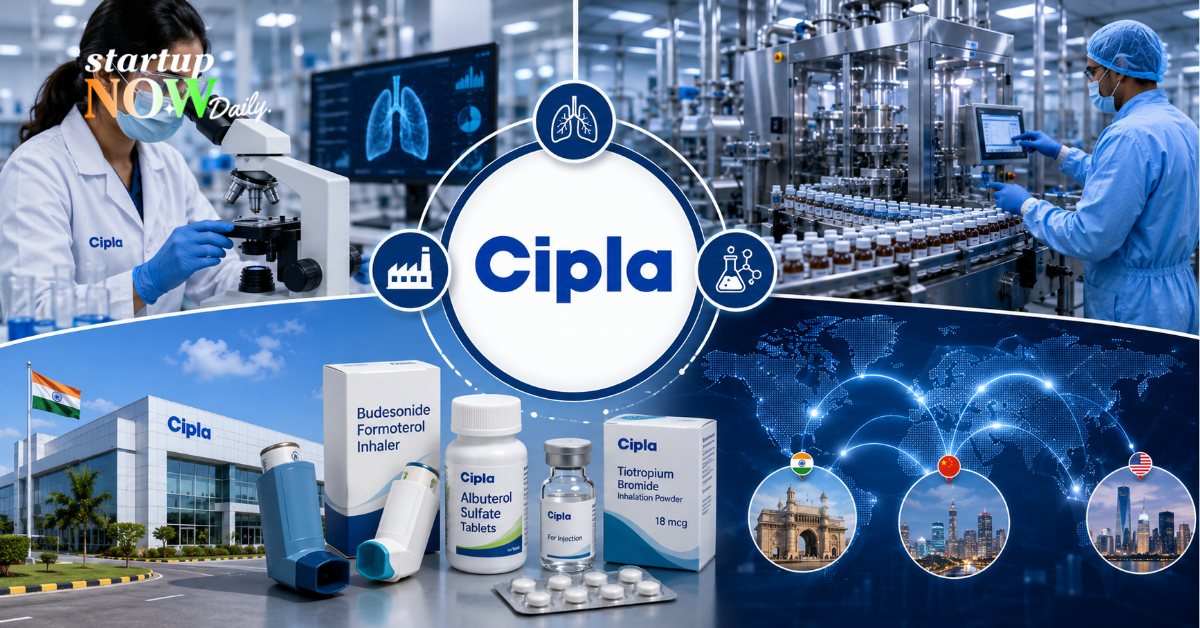
Cipla Accelerates Investments Across India, China And The US
Pharmaceutical major Cipla is significantly expanding its manufacturing footprint across India, China and the United States as it sharpens its focus on respiratory therapies, specialty medicines, oncology products and complex drug delivery systems.
According to its FY26 annual report, the Mumbai-based drugmaker has approved capital investments exceeding ₹4,000 crore over the past two years to strengthen its capabilities in respiratory active pharmaceutical ingredients (APIs), inhalation products, oncology ingredients and global manufacturing infrastructure.
The investments reflect Cipla’s strategy of moving deeper into high-value, differentiated therapies while strengthening its position in core segments such as respiratory care, where it has historically been one of India’s strongest players.
Why Is Cipla Investing Heavily In Respiratory And Specialty Medicines?
The global pharmaceutical industry is witnessing rising demand for complex therapies that require advanced manufacturing capabilities, regulatory expertise and specialized production infrastructure.
Respiratory products, inhalers, oncology medicines and specialty drugs typically offer higher margins and face lower competition compared to traditional generic medicines.
Cipla has identified these categories as key growth drivers for the next decade.
“As part of these investments, we have commissioned our greenfield respiratory API facility at Kurkumbh in Maharashtra and are continuing expansion across oncology APIs, inhalation products and key dosage forms,” Managing Director and Global CEO Achin Gupta said in the annual report.
The company believes that strengthening manufacturing capabilities across these segments will improve supply chain resilience while supporting future growth across global markets.
What Does The New Investment Plan Include?
The ₹4,000 crore investment program spans multiple geographies and therapeutic categories.
A major component is the commissioning of a new greenfield respiratory API facility at Kurkumbh in Maharashtra. The facility is expected to strengthen Cipla’s backward integration strategy by increasing in-house production of critical respiratory ingredients.
The company is also expanding:
- Respiratory API manufacturing capacity
- Inhalation product capabilities
- Oncology API production
- Specialty drug manufacturing
- Global dosage-form facilities
- International supply chain infrastructure
These investments are aimed at improving production efficiency while enabling the company to support growing demand from regulated markets such as the United States and Europe.
Why Respiratory Care Remains A Strategic Focus
Respiratory therapies continue to be one of Cipla’s most important businesses globally.
The company has built a strong reputation over decades through its portfolio of asthma, chronic obstructive pulmonary disease (COPD) and other respiratory treatments.
However, manufacturing inhalation products remains one of the most technologically complex segments in the pharmaceutical industry.
Unlike conventional tablets and capsules, inhalers require specialized formulation expertise, device integration capabilities and stringent regulatory approvals.
By expanding both API production and inhalation manufacturing infrastructure, Cipla is positioning itself to capture a larger share of the global respiratory drug market.
Expansion Beyond India
The company’s investment strategy extends beyond domestic manufacturing.
Cipla is strengthening its production and supply chain capabilities across China and the United States to support international growth and reduce dependency on any single geography.
Global pharmaceutical companies have increasingly prioritized diversified manufacturing networks following supply chain disruptions experienced during the pandemic years.
By expanding its footprint across multiple markets, Cipla aims to improve operational flexibility while ensuring uninterrupted supply for key products.
The strategy also aligns with the company’s broader ambition to strengthen its presence in regulated markets where quality standards and supply reliability are critical competitive advantages.
Specialty And Oncology Drugs Become Key Growth Engines
Alongside respiratory therapies, Cipla is increasingly investing in oncology and specialty medicines.
The global oncology market continues to be one of the fastest-growing pharmaceutical segments, driven by rising cancer incidence, improved diagnostics and advances in targeted therapies.
Specialty medicines also offer attractive growth opportunities because they address complex diseases and often face lower pricing pressure than traditional generic drugs.
The expansion of oncology API manufacturing capabilities suggests Cipla is preparing to deepen its participation in this high-growth segment.
What Does This Mean For Cipla’s Future?
The ₹4,000 crore investment program highlights Cipla’s transition from a traditional generic drug manufacturer toward a more diversified pharmaceutical company focused on complex and differentiated products.
By investing in respiratory APIs, inhalation technologies, oncology ingredients and global manufacturing infrastructure, the company is building capabilities that could drive growth over the next decade.
As competition intensifies in conventional generic medicines, pharmaceutical companies are increasingly focusing on specialized therapies where technological expertise, regulatory know-how and manufacturing sophistication create higher barriers to entry.
For Cipla, the expansion signals a long-term commitment to strengthening its leadership in respiratory care while building new growth engines across specialty and oncology segments.
The strategy could help the company improve profitability, expand global market share and strengthen its position among leading pharmaceutical manufacturers worldwide.