
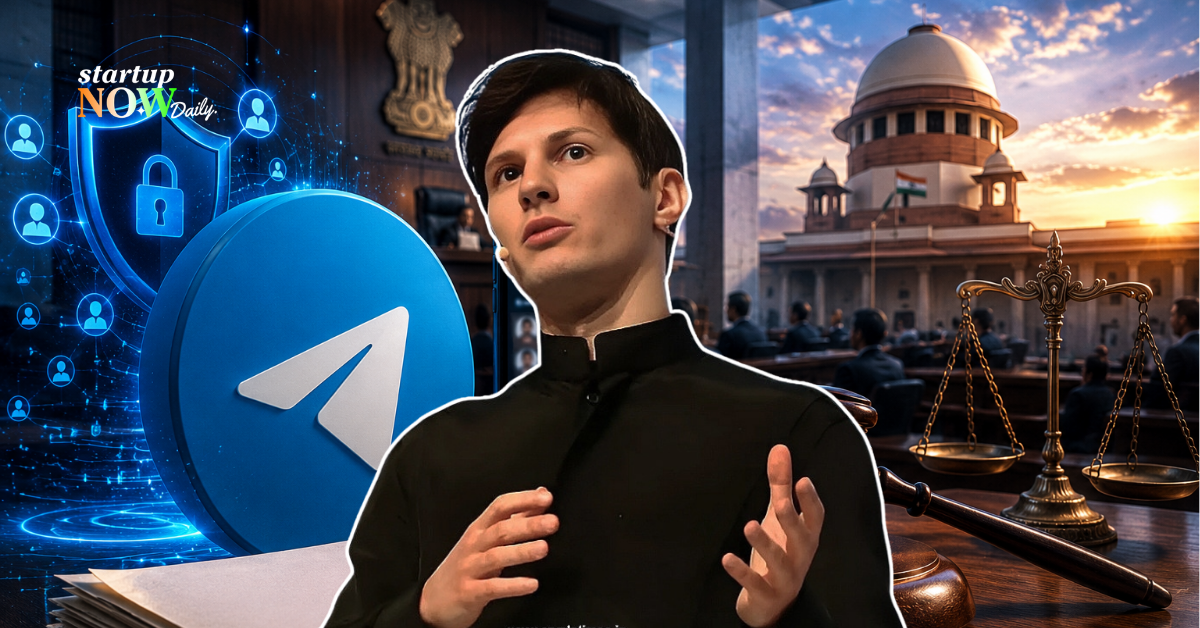
Why Has Telegram Challenged The Government’s Order?
Messaging platform Telegram has approached the Delhi High Court against the Centre’s decision to temporarily suspend its services in India ahead of the NEET UG 2026 re-examination.
The company has challenged the government’s directive that blocked access to Telegram until June 22 and restricted its message editing feature until June 30.
The matter was mentioned urgently before a vacation bench of Justice Tejas Karia by advocate Madhav Khosla, who argued that the decision has impacted more than 150 million Telegram users across India.
According to reports, the Delhi High Court has agreed to hear the matter on an urgent basis.
The legal challenge marks a significant escalation in the ongoing dispute between Telegram and Indian authorities over examination-related fraud concerns.
Why Did The Government Temporarily Block Telegram?
The Centre ordered the temporary suspension of Telegram services ahead of the NEET UG 2026 re-examination scheduled for June 21.
The re-test is being conducted following allegations of question paper leaks during the original examination held on May 3.
The directive was reportedly issued by the Ministry of Electronics and Information Technology (MeitY) under Section 69A of the Information Technology Act, 2000, following recommendations from the National Testing Agency (NTA).
Authorities argued that several Telegram channels and groups were being used to circulate fake examination papers, scam messages, and misleading claims related to the medical entrance examination.
According to the NTA, repeated takedowns of individual channels were insufficient because new groups continued to emerge.
As a result, the government opted for platform-level restrictions during the examination period.
What Is The Controversy Around Telegram’s Message-Editing Feature?
Apart from the temporary suspension, the government also directed Telegram to disable its message-editing functionality in India until June 30.
The NTA claims that the feature has been misused to create false evidence of question paper leaks.
According to officials, administrators could allegedly edit older messages and attach examination papers after the test had already been conducted while retaining the original timestamp.
This could create the impression that examination papers were circulating before the examination, even when they were not.
Authorities argue that restricting the editing feature is necessary to prevent the creation of fabricated “paper leak” evidence during the sensitive post-examination period.
How Has Telegram Responded?
Telegram founder and CEO Pavel Durov has strongly criticized the government’s decision.
In a public statement posted on X, Durov described the temporary ban as a mistake and argued that it unfairly penalizes millions of legitimate users.
According to Durov, blocking Telegram will not stop bad actors from sharing illegal content but will instead disrupt communication for ordinary users who rely on the platform daily.
He stated that Telegram had already removed hundreds of channels allegedly involved in examination-related scams and fake paper leak claims.
The company also said it is working to make message-edit indicators more prominent in order to reduce manipulation and prevent backdating scams.
What Did Pavel Durov Say?
Durov argued that Telegram has actively cooperated in removing problematic channels and groups.
“Telegram is a force for good. Banning it, even temporarily, is a mistake,” he said while criticizing the government’s approach.
The Telegram chief has repeatedly maintained that targeting an entire platform is disproportionate when enforcement can be directed against specific violators.
How Have App Stores Responded?
Following the government’s directive, Google has removed Telegram from the Play Store in India.
Apple is also expected to remove the application from its App Store if it complies fully with the government order.
The move has significantly limited access for new users seeking to download the platform during the restriction period.
Existing users have also reported access disruptions across multiple networks.
What Could The Court Decide?
The Delhi High Court’s decision could have important implications for digital platform regulation in India.
The case raises broader questions around proportionality, platform liability, user rights, and the scope of government powers under the Information Technology Act.
Telegram is expected to argue that the temporary ban affects millions of lawful users and exceeds what is necessary to address examination-related concerns.
Meanwhile, the government is likely to defend the restrictions as a temporary and targeted measure aimed at protecting the integrity of one of India’s largest entrance examinations.
What Happens Next?
With the NEET UG re-examination scheduled for June 21 and the platform restriction remaining in force until June 22, the timing of the court proceedings has become critical.
The outcome of the hearing could determine whether Telegram regains access before the restriction period ends or whether the government’s order remains in effect.
Beyond the immediate dispute, the case is likely to become a significant reference point in future debates over digital platform governance, online communication services, and government intervention during sensitive national examinations.