
Activist Seeks Assurance on Education Accountability and Paper Leak Reforms Before Calling Off Fast
Activist and education reform advocate Sonam Wangchuk has said he is prepared to end his ongoing hunger strike if the government or Members of Parliament commit to addressing education accountability and examination paper leaks during the Monsoon Session of Parliament.
In a post on social media platform X, Wangchuk outlined three specific conditions under which he would call off his fast, linking his decision to concrete assurances on education reforms rather than symbolic commitments. His statement comes as Parliament convenes for its Monsoon Session and amid heightened political attention surrounding his protest.
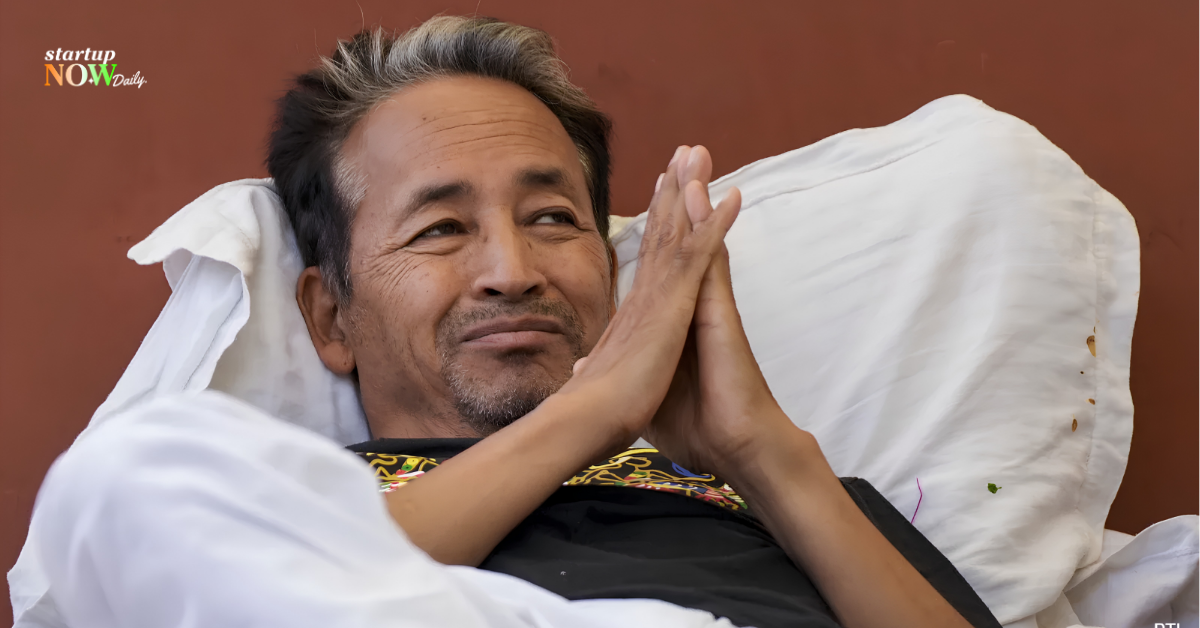
Wangchuk has been admitted to Safdarjung Hospital in New Delhi, where he claims his movement and communication have been restricted following his detention.
What Conditions Has Sonam Wangchuk Set?
In his post, Wangchuk said he would end his hunger strike if any one of the following conditions is fulfilled.
First, he urged the government to accept responsibility for recent shortcomings in India’s education system, including repeated incidents of competitive examination paper leaks and broader concerns regarding educational governance.
Second, he said he would end the fast if he and the leadership of the Cockroach Janata Party (CJP) are allowed to reach the gates of Parliament, where Members of Parliament and leaders from different political parties publicly assure him that education accountability will be discussed during the current Parliament session.
Third, Wangchuk stated that if his health does not permit him to travel, he would end the hunger strike if MPs and political leaders visit him at Safdarjung Hospital and provide the same assurance regarding parliamentary discussion on education reforms.
According to Wangchuk, these commitments would demonstrate that the issue has received formal political attention.
What Did His Family Say?
Earlier, Wangchuk’s wife, Gitanjali Angmo, also appealed to political leaders to engage directly with him.
She stated that Wangchuk would call off his hunger strike if leaders visited him at Safdarjung Hospital and assured him that education accountability and reforms would be raised during the ongoing Monsoon Session of Parliament.
According to her, if such assurances are not received, Wangchuk intends to continue his protest despite remaining under medical supervision.
She also noted that he had continued his hunger strike even after spending two days in the hospital.
Why Is Wangchuk Protesting?
Wangchuk has repeatedly raised concerns over accountability within India’s education system, particularly following several high-profile incidents involving examination paper leaks and allegations of irregularities in competitive recruitment and entrance examinations.
His current hunger strike seeks stronger institutional accountability and systemic reforms aimed at improving transparency, integrity, and governance in education.
Through his campaign, Wangchuk has argued that restoring public confidence requires greater political commitment to addressing recurring examination-related controversies.
His latest demands focus specifically on ensuring that education reforms become part of Parliament’s legislative discussions.
Security Tightened Ahead of Parliament Session
Ahead of the opening of the Monsoon Session, security was increased around Jantar Mantar in New Delhi following reports of a proposed march towards Parliament by supporters of the Cockroach Janata Party (CJP).
Police personnel were deployed around the protest site to maintain law and order.
According to official sources, the organization had announced plans for a march to Parliament on the first day of the session. However, reports indicated that permission for the proposed march had not yet been obtained from the Delhi Police.
The planned demonstration had earlier been announced by Wangchuk before he was shifted to Safdarjung Hospital.
Authorities continue to monitor the situation closely as Parliament begins its proceedings.
What Could Happen Next?
The coming days are expected to determine whether Wangchuk receives the political assurances he has sought.
If Members of Parliament or the government formally commit to raising education accountability during the Monsoon Session, Wangchuk has indicated he would end his hunger strike.
If no such commitment is forthcoming, his protest could continue, potentially drawing greater political attention as Parliament debates national issues over the coming weeks.
The developments are being closely watched by students, education reform advocates, and civil society groups, particularly against the backdrop of growing public concern over examination integrity and educational governance.
Whether Wangchuk’s demands translate into parliamentary debate remains to be seen, but his protest has once again brought the issue of education accountability to the forefront of the national conversation.