
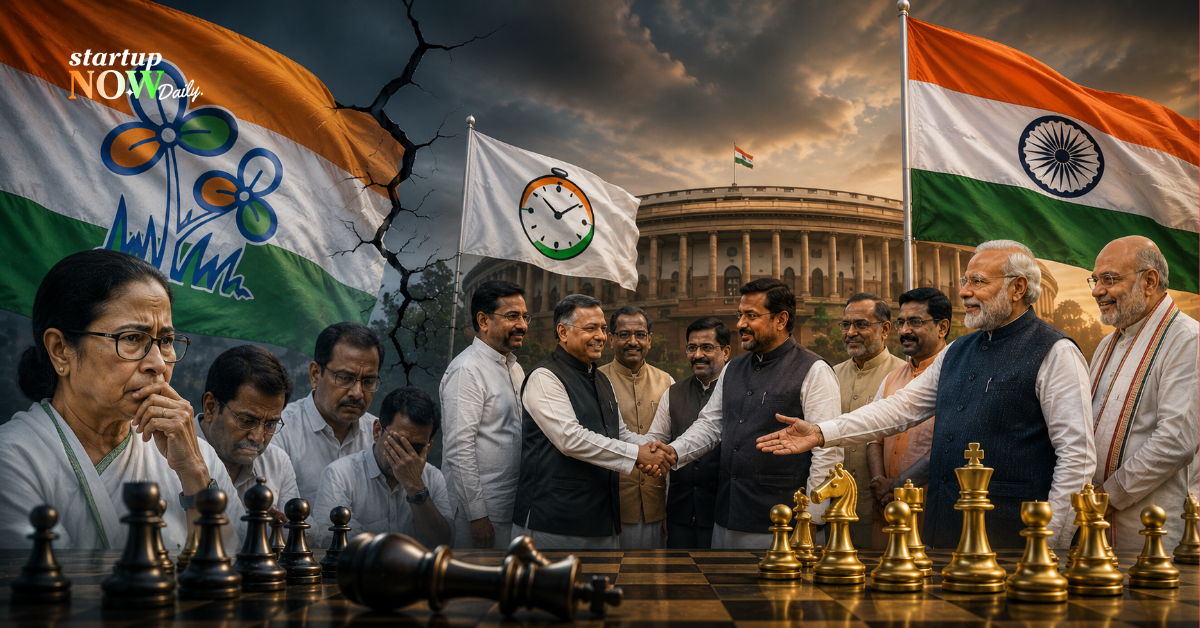
Why Have Dissident TMC MPs Announced A Merger With NCPI?
The political crisis within Mamata Banerjee-led All India Trinamool Congress intensified on Sunday after a group of dissident MPs announced their merger with the Nationalist Citizens Party of India (NCPI) and pledged support to the NDA government.
The rebel faction also approached Om Birla, seeking separate seating arrangements in Parliament, signalling a formal break from the party leadership.
The development marks a significant escalation in the ongoing power struggle within the Trinamool Congress, which has already witnessed divisions both in Parliament and the West Bengal Assembly.
How Many MPs Have Backed The Breakaway Group?
According to rebel MP Kakoli Ghosh Dastidar, a total of 20 TMC MPs signed a representation submitted to the Lok Sabha Speaker.
The dissident camp claims that the support of two-thirds of the party’s Lok Sabha MPs entitles them to seek separate recognition within Parliament.
Speaking after meeting the Speaker, the rebel leaders stated that they would merge with NCPI and support the National Democratic Alliance (NDA).
Why Was NCPI Chosen As The New Political Platform?
The Nationalist Citizens Party of India is a relatively unknown political party based in Tripura with limited electoral presence.
Political observers believe the merger route was chosen because parliamentary rules do not provide recognition for separate factions within an existing political party.
By merging into another registered political entity, the dissidents may seek to strengthen their legal and procedural position while pursuing recognition within Parliament.
Can The Rebel Group Claim The Real TMC Identity?
Senior MP Sudip Bandyopadhyay said the rebel faction would eventually move the courts to establish itself as the “real TMC.”
According to Bandyopadhyay, the group plans to stake claim not only to the party’s identity but also to its election symbol.
He argued that since the dissidents represent two-thirds of the parliamentary party, they have the right to seek recognition through legal channels.
However, political and legal experts note that such claims could trigger a lengthy court battle involving electoral laws, anti-defection provisions and party ownership disputes.
How Has The Mamata Banerjee Camp Responded?
The official TMC leadership has strongly opposed the move.
Abhishek Banerjee submitted a letter to Lok Sabha Speaker Om Birla urging him not to grant recognition, facilities or status to any breakaway faction.
The letter argued that India’s anti-defection framework does not permit the formation of separate groups within an existing political party.
Banerjee also cited the Supreme Court’s Constitution Bench judgment in the Maharashtra political crisis case, which effectively removed the legal defence of a “split” under the Tenth Schedule of the Constitution.
What Is TMC’s Legal Argument?
According to the TMC leadership, Parliament can recognise only one political party and not competing factions claiming the same identity.
The party has requested that any decision regarding dissident MPs be taken only after hearing the official organisation’s position.
Senior leaders argue that the Constitution and anti-defection laws do not support parallel claims within a recognised political party.
Why Is The Crisis Expanding Beyond Parliament?
The political battle is not limited to the Lok Sabha.
Last week, 64 of TMC’s 80 MLAs reportedly broke away and secured recognition as a separate legislative formation in the West Bengal Assembly, with Ritabrata Banerjee being recognised as Leader of Opposition.
That recognition has already been challenged by the Mamata Banerjee-led faction before the Calcutta High Court.
The simultaneous conflicts in Parliament and the Assembly have turned the dispute into one of the biggest internal political crises faced by the Trinamool Congress in recent years.
What Happens Next In The TMC Power Struggle?
The next phase of the battle is expected to shift to courts, constitutional authorities and parliamentary institutions.
While the rebel camp seeks separate recognition, a claim over the party’s identity and eventual control of its election symbol, the official TMC leadership is demanding disqualification of dissident members under anti-defection provisions.
The decisions taken by the Speaker, Election Commission and judiciary in the coming weeks could have a significant impact on the future of the Trinamool Congress and West Bengal’s political landscape.