
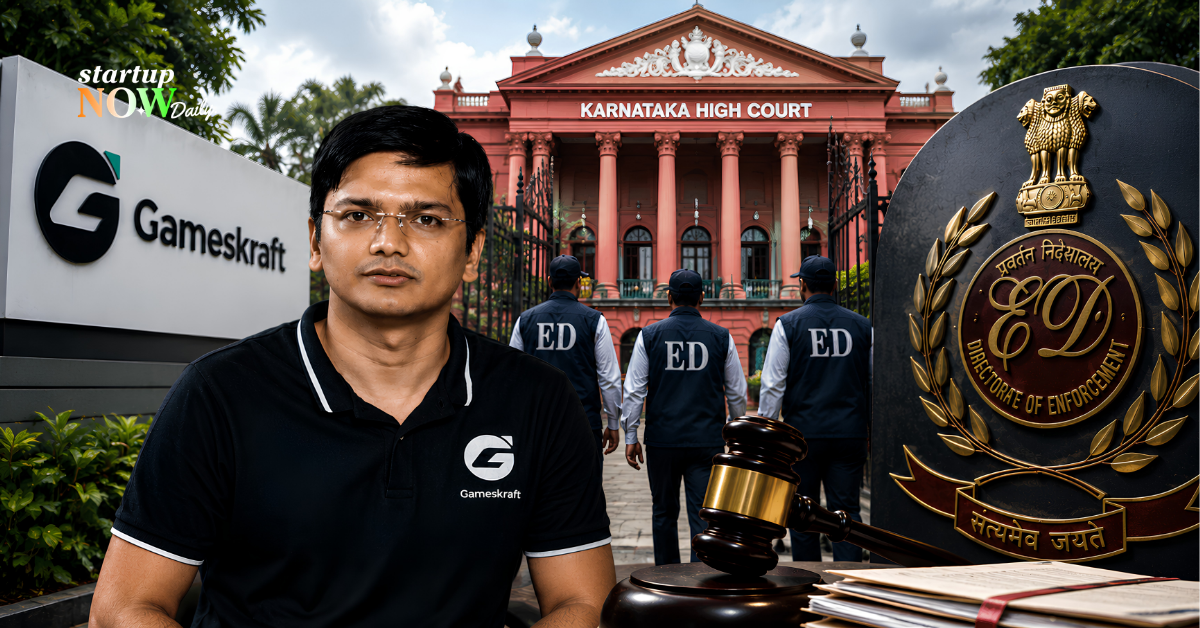
Why Did The Karnataka High Court Order The Release Of Gameskraft Founders?
In a significant legal setback for the Enforcement Directorate (ED), the Karnataka High Court has ordered the immediate release of Gameskraft founders Deepak Singh, Vikas Taneja, and Prithviraj Singh, ruling that their arrests were not carried out in accordance with the law.
Justice M Nagaprasanna allowed petitions filed by the three founders and declared their arrests “contrary to law”, according to multiple media reports. The court also directed prison authorities to release them immediately. A detailed copy of the judgment is yet to be made public.
The ruling comes as a major relief for the founders of one of India’s largest online gaming companies and marks an important development in the ongoing scrutiny of the real-money gaming sector.
What Was The ED’s Case Against Gameskraft?
The three founders, who serve as directors of Gameskraft Technologies and RummyCulture Technologies, were arrested from Gurugram in May and subsequently brought to Bengaluru as part of a money laundering investigation.
The ED’s case is based on three FIRs registered in Telangana earlier this year.
According to the agency, Gameskraft’s online gaming platforms allegedly engaged in unfair practices, misled users, and generated proceeds of crime that were subsequently laundered through various financial transactions.
Investigators claimed the company attracted users through bonuses, referral incentives, tournament rewards, and cash-based promotional offers across its real-money gaming platforms.
The agency further alleged that several users had raised complaints regarding suspected bot activity, algorithm-driven gameplay, recurring score patterns, blocked accounts, and forced logouts.
Why Did The ED Allege Money Laundering?
The most serious allegation in the case relates to the purported diversion of funds.
According to the Enforcement Directorate, the founders, along with former Chief Financial Officer Ramesh Prabhu, diverted and laundered nearly ₹250 crore through investments made in futures and options trading as well as mutual fund instruments.
The agency has argued that these transactions formed part of a larger money laundering network involving proceeds generated through the company’s gaming operations.
However, while the ED has made these allegations, the High Court’s latest order specifically addresses the legality of the arrests and does not determine the final outcome of the money laundering case itself.
What Did The High Court Say?
Although the detailed judgment is awaited, reports indicate that Justice Nagaprasanna concluded that the arrests were not conducted in accordance with legal requirements.
The court’s observations effectively invalidate the arrests while granting immediate relief to the founders.
Legal experts note that such orders often focus on procedural compliance, due process, and whether investigating agencies followed statutory requirements while exercising arrest powers.
Does The Order End The Investigation Against Gameskraft?
No.
The Karnataka High Court’s decision provides relief to the founders on the issue of arrest but does not bring the underlying investigation to an end.
The ED remains free to continue its money laundering probe, examine financial records, question individuals involved in the case, and pursue further legal action if necessary.
The agency may also choose to challenge the High Court’s ruling before a higher judicial forum.
As a result, the broader legal battle surrounding Gameskraft is expected to continue.
Why Is This Case Important For India’s Gaming Industry?
The judgment comes at a time when India’s online gaming sector is facing heightened regulatory and legal scrutiny.
Real-money gaming companies have been under increasing pressure from regulators, tax authorities, and enforcement agencies over issues related to taxation, compliance, consumer protection, and financial transparency.
Earlier this year, the Supreme Court upheld the constitutional validity of the 28% GST levy on online real-money gaming. The verdict strengthened the government’s position on taxation and enabled authorities to pursue pending tax demands against gaming operators.
The Gameskraft case has become one of the most closely watched legal battles in the industry because of its potential implications for regulatory enforcement and compliance standards.
What Happens Next?
With the High Court ordering the immediate release of the founders, attention will now shift to the detailed judgment and the next steps from the Enforcement Directorate.
The agency’s investigation into alleged money laundering activities remains active, and officials are expected to review the court’s observations before deciding on future legal action.
For Gameskraft, the ruling represents a significant legal victory. However, the company continues to face ongoing regulatory and investigative scrutiny as India’s online gaming industry navigates an increasingly complex legal landscape.